Category: Tuscany

  • Rustici farm

    Web site

    Map reference

    Photo gallery

    This farm was founded in 1954 by grandfather Giuseppe, while some years later, his son Giovanni Rustici, who we met at the farm, took over the farm. A few years ago, he in turn let his sons take charge of the farm, while he’s mainly occupied with growing organic vegetables and fruits and some other tasks. In fact, the farm is totally organic, meaning that they have to, among other things, avoid using pesticides and artificial fertilisers. In addition, the sons of Giovanni are living proof that also young people, or at least a few of them, dedicate themselves to agriculture.

    During our visit, we were free to roam freeely around the farm while we were waiting for Giovanni Rustici to guide us. In the meantime, we went to a rudimentary fence inide of which a group of about 50 pigs were walking around freely. Two sows were lying on the ground, each of them nursing a group of piglets, which changed irregularly from suckling and running around here and there. Actually, I visited the Rustici farm at Easter in 2009 with another teacher from the Terramare language school. Then, Giuseppe Rustici, one of the sons of Giovanni mainly showed us how they were raising cattle for meat and milk.

    A short distance from the pigs, young calves were inside a fence, lying on the ground and ruminating, while the youngest ones were inside tiny buildings, getting used to staying away from their mothers.

    When Giovanni Rustici arrived, we paid a visit to the slaughterhouse where a worker was cutting up pig’s meat in order to make sausages. Next, we went to the farmhouse dairy where another worker was removing mould from the surface of cheeses by means of running water and a brush. We also went to the farm shop where the wife of Giovanni was selling products of the farm to a customer. She told us that they make various types of cheeses and yogurt twice or thrice a week.

    Finally, we followed Giovanni to another part of the farm where a huge ox called Palino was grazing all by himself on a field. Giovanni picked up some fresh grass from the ground and held it out for the ox to eat it. Having approached Giovanni, he got some fresh grass and a caress on his big, shaggy forehead.

    Next, we followed Giovanni to a quite big field some kilometres from the farm where he’s in charge of growing a wide range of vegetables organically. Some of the vegetables were growing in greenhouses, but the major part was growing outside. During our visit, a worker was collecting celery and Giovanni put on his belt with a knife and whetstone, doing the same type of work for some time. He also showed us that these plants are full of fibres by dividing them longitudinally.

    Next, we followed Giovanni to other parts of the field, which looked surprisingly well tended given that it was in the middle of November. Lots of varieties of vegetables were growing in rows, while I had expected that the field would lie more or less fallow until next spring. During our visit, there were some ibis birds, which were eating parasites from the plants, according to Giovanni. It’s worth having a look at this photo, which shows the impressive range of fruits and vegetables grown at this farm.

    All the vebetables, which are being grown on these fields, are sold in the well-assorted farm shop together with meat from their cows and pigs together with milk, cheese, yogurt, olive oil, red wine, various types of pasta and so on where all of it has been made at this farm.

  • La Scapigliata farm

    Web site

    Map reference

    Photo gallery

    Going north on the Via Aurelia, we turned right when we were approaching the village of Talamone, then we passed the hamlet of Fonteblanda and going to the top of a small hill, we came to a group of buildings,. Having passed them, we were met by the owners of the La Scapigliata farm, Aurelia and her husband, who received us warmly. The name of the farm, meaning dishevelled, is derived from the former owner, who called the hair of his daughter scapigliata due to the ever-present wind.

    Obviously, the owners of this farm love their work, which besides running the farm, has included restoring farm buildings dating from the 1900s in a skillful and original way. This work has been run by the owner Aurelia, who is an architect. It is striking how the huge building, which houses the restaurant and the spacious kitchen, was originally used for storing forage and hay, agricultural machines together with various products required to run a large cattle farm. She has also overseen the restoration of the barn, which was used to house cattle, The big trusses supporting the wooden roof are clearly visible, thw walls are covered with plaster and painted white, wooden boards cover the floor, all done with exquisite workmanship. Else, the troughs from which the cattle were eating, inclined floors with chutes made by red ceramic tiles and robust pillars supporting the trusses complemented our impression.

    Moreover, there is an exhibition of Etruscan jewellery made by two local goldsmiths who tried to make exact copies of originals residing in museums, using only the techniques and tools, which were available to the Etruscans more than 2000 years ago. This prevented the goldsmiths from using any kind of magnifiers and not exceeding a temperature of 400°C, far below the melting point of gold.

    Next, we entered the huge building, housing the restaurant and the adjacent, open kitchen where the husband of Aurelia had already started preparing our meal. During the preparation, we were free to follow and even photograph his activities. After some time, lunch was ready and we had the following menu:

    • bruschetta with olive oil and garlic
    • starter based on sheep’s cheese stored in pomace  of Morellino together with various products from the farm
    • soup with fresh vegetables and legumes
    • pasta with tomatoes and basil
    • beef stew
    • peach pie
    • digestive – Amaro Etrusco

    In the tourist season from May to September, guests can also eat outside, weather permitting. In addition, jazz bands perform outside some weekends, making the experience of the guests even better.

    We could also visit the following:

    • the olive grove which had been harvested as early as September in order to avoid the olive fruit fly , which deposits eggs inside the olives in October. The olive grove consists of various types of olive trees whose olives mature at different times, leading to various degrees of maturation at harvest time.
    • the vineyard, which was planted three years ago and has only given a tiny amount of wine for private consumption so far.
    • A garden with solanales, legumes, strawberries, vegetables, cucurbita and aromatic herbs. Naturally, some of the produce from the garden is used in the kitchen as ingredients for meals for visitors.

    Moreover, black pigs are raised at this farm (a cross between the race Large Black pig, Nero dei Nebrodi from Sicily  and the local Nero Amiatino. About 50 adults and about 20 piglets which have been weaned are kept inside separate fences, while the smallest ones are staying with their mothers. The pigs are slaughtered when they are about 2 years old and weighing about 150 kilogrammes.

    We also visited a group of adult pigs, which could roam freely inside a wide fence, but they had to stay inside an enclosure from dusk to dawn. Upon arrival, the pigs were hardly visible, but a worker called them, making them approach us after a short time. Mostly, they kept their snouts close to the ground, always searching for food.

    It was a great pleasure to visit this farm.

  • Seafood auction in Porto Santo Stefano


    Photo gallery

    Having arrived at the port of the town of Santo Stefano at sunset, we could see fishermen’s ships moored to the dock and fishermen who were sorting and sprinkling the day’s catch at the stern of the ships. The fish was sorted in 3 classes: first, second and third according to species, weight and various other characteristics. When everything was ready, the fish was brought in white styrofoam boxes filled with ice and brought by car to a large building where an auction would take place.

    The contents of the boxes vary from fish like mackerel and mullet, more or less mixed (considered as a delicacy for those who like an Italian dish, which is called «fritto misto». As noted here, it consists of a mixture of cod, mullet, sole, Mediterranean scaldfish, while small fry of anchovies, rock goby and picarel  may also be included; other species include giant, red shrimp of prime quality, scampi and musky octopus, all of which is put in rows of white boxes on the top of pallets placed on the floor of a big hall. After a pallet had been filled with boxes full of seafood, an auctioneer assessed the maximum price of the seafood according to species of prime quality and the minimum price determined by the same species of the lowest quality. In addition to the auctioneer, the pallet was surrounded by buyers coming from far and wide in Italy, getting ready to make their offers. The buyers buy the seafood wholesale and they sell their goods to retailers, restaurants, fishmongers, etc.

    All the time people were talking loudly, even shouting and gesticulating while the seafood, which was placed in three rows on each pallet, gradually was bought by the highest bidder. The contrast with the Fish central in Oslo, Norway could hardly have been greater. There, workers were just collecting seafood according to customers’ orders, while no buyers were present.

    After a successful purchase, workers would cover the fish with ice, package everything in adhesive plastic, make a label with the name of the buyer, the date, the weight and other data on a computer, print it and attach it to the package. Apparently, this is necessary to guarantee that what the wholesalers will be offering to buyers, located at various destinations and markets in Italy, is genuine, .

    During the auction, the auctioneer tried naturally to obtain as high a price as possible, but when he couldn’t get the minimum price he asked for, the corresponding crates were taken off the pallet and put on another one. When the auction was finished, the crates would be packaged as described above. The remaining seafood would be sold at local markets, restaurants, fishmongers and even to local people.

    Since fish needs to be consumed shortly after having been caught, everything is done efficiently, setting strict requirements to the fishermen, the auctioneer, the wholesalers and the workers who make the auction possible.

  • Agrotourism Doganella

    Web site

    Map reference

    Photo gallery

    In order to arrive at Agritourism Doganella, we had to pass a driveway with large stone pine trees on both sides. Due to to trees’ shallow roots, it felt more like driving on a potato field than on a road. Anyway, it’s always a pleasure to pass under such lovely trees which almost formed a roof above the road. After about 200 metres we arrived at a bend leading between two houses where we could see a sign indicating how to arrive at the guesthouse. Next, we met the owners, Alvido Brillo and his wife. Alvido told us about the beginning of his life when his mother wasn’t able to nurse him, feeding him donkey’s milk instead since it’s quite close to human breast milk. History repeated itself recently when a niece of his was born prematurely and her mother wasn’t able to nurse her. Instead, Alvido brought milk from one of his goats to his little niece, who started growing normally. In fact, Alvido is breeding a small flock of goats consisting of six goats, one male goat and 5-6 kids. This contributes to show the passion Alvido feels for animals, which he has been breeding since he was a young boy.

    For the last seven years, he has been raising goats which enriches the atmosphere of the agrotourism and his life, but earlier he worked only with sheep, keeping an enormous herd of 1000 sheep. He’s 77 years old and he has fond memories of spending 7 hours a day, 4 in the morning and 3 in the evening milking the sheep by hand. There were also three donkeys in a separate enclosure, one of which was only a few days old and which approached us in order to get caressed.

    During his life, he has won numerous prizes and certificates of merit from local and national organisations for pastoralism and for participating at fairs.

    Towards the evening, it was time to milk the goats. Then, Alvido put feed in a trough, next he let the goats enter and start eating by first passing their heads through a metal structure, which was attached to the trough. When all of them had entered, he locked the structure such that they had to stay put. Then, he milked them one by one, filling a kettle with milk. When he was finished, the goats were released.

    Having a large supply of pumpkins, he divided a couple of them with an axe and gave them to the kids, while he fed the goats with fodder.

    Afterwards, Alvido kindly invited us to enter their kitchen where he started making goat’s cheese from the fresh milk. He told us about his life as a shepherd and he showed us his prizes hanging in the living room. It was a great pleasure meeting Alvido and his wife Oriana, who is in charge of the guesthouse.

    For those who are interested in archaeology, there is  an Etruscan building on the property, open for being visited by all their guests.


  • Fatarelli Agriculture

    Sorting vegetables

    Photo gallery

    A small company called Fatarelli Agriculture is located in a large brick building in the countryside of Capalbio Scalo where a local woman was running the company, while workers from Eastern Europe were sorting and putting artichokes in boxes. The manager told us that she had tried to employ local people without success because they aren’t willing to sow, plant, cultivate, harvest and put the harvest in boxes. Instead, workers from Eastern Europe willingly do this work, they do it well and they are willing to work long hours and even on days off if really required.

    This company cultivates asparagus, melon, eggplant, courgette, tomato and more on open fields.

    The high season lasts from May to September, but work is done all year, while the number of workers of course vary in accordance with demand. In addition to cultivating local products, this company also buys and sells agricultural products from other parts of Italy. In fact, during our visit workers were packing artichokes, which had been grown in Sardinia where the warmer climate leads to that they mature in late October/early November.

    We were invited to watch two workers from Romania harvest courgette, which they brought back to the company for packaging.

    This company distributes agricultural produce to markets in Tuscany and to other regions like Emilia.

  • Harvesting olives

    Harvesting olives

    Photo gallery

    In the hills above the village of Porto Ercole, the Fois family, who originally came from Sardinia, lives in a property called Spaccamontagna in the area of «La Marchesa». In 1980, Mr. Fois planted a small olive grove, which 36 years later, gives a large amount of olives.

    During our visit, he showed us how, by holding an olive branch shaped like a Y, he could find a water source below ground. Initially, the branch was horizontal, but the end of the branch folded towards the ground as he approached the water source. By finidng water on his own property, he could water the olive trees for all these years in an area, which has in general far too little rain. In fact, I was told by several olive growers and owners of olive oil mills that 2016 was pretty dry and that the olive harvest was very limited. However, the overall quality was really good.

    He also showed us how he captured olive fruit flies, which deposits eggs inside the olives, destroying them. In order to avoid using pesticides, he used simple, but efficient traps instead.

    One of these traps was made of a flat sheet of green plastic, letting it hang from a branch on an olive tree and applying a sticky substance to each side of the plastic sheet. Since the substance was attractive to the olive fruit flies, they landed on the plastic sheet, but they coudn’t leave. We saw several of these traps covered with flies. Another trap consisted of plastic bottles, which were hanging on a wall next to the olive grove. All the bottles were partly filled with a liquid, which attracted the flies, while slightly above the liquid, there was a small hole, letting the flies enter the bottle easily, but nearly impossible to get out again. Then, sooner or later, they would drown in the liquid.

    Regarding harvesting the olives, a net was put below the olive trees, then they used a machine with moving parts and powered by a car battery to make the olives fall down on the net. In addition, in one of the olive trees, three person were forcing the olives to fall down on a net below the olive tree by holding their hands around a branch with olives and forcing them to fall down.

    Before we left, the Fois family generously invited us to a meal consisting of bruschetta with olive oil, prosciutto, cheese and red wine. A very nice and delicious way of finishing our visit.

  • Snail farm

    Snail on a cabbage leaf

    Photo gallery

    In a place called Ciocciolo di Capalbio on a property owned by 4 brothers, one of the owners has started raising snails of the race Helix Aspera since May 2016. Being new to raising snails, the family first went to a course at the International Snail Breeding Institute of Cherasco, Piemonte, Italy.

    The field on which the snails are raised is divided into several rectangular shapes and all of them are surrounded by nets with a very small net size. In addition, there is a net below ground in order to prevent the snails from digging tunnels below the fences. Moreover, there are also a net on the top of each fence in order to both prevent the snails from scaling the fences and escaping and as a means of hindering birds from taking them.

    As the average temperature gets lower in autumn, the snails dig small burrows below ground, in which they stay lethargic from November to March when spring arrives. The owners have planted chicory and cabbage inside the fences such that the snails can eat whenever they like, but in order to supplement their diet, the owners have planted sunflowers and chili pepper, both of which are eaten with relish by these terrestrial molluscs.

    When the snails become lethargic, the owners will cut down all the plants inside the fences such that they protrude 5 cm maximum above the ground. Additionally, the owners told had already started preparing an adjacent field to which the snails will be transferred in March 2017 where they can eat fresh plants.

    The first harvest of the snails will be done manually in June 2017 when their shells will have become rather hard. Since the mortality of the snails is quite high, the owners will try to compensate the loss by means of the increased request for another product from the snails: slime. In fact, the slime of these animals is used both for cosmetics and medicinal purposes.

    The International Snail Breeding Institute of Cherasco has made a machine, which extracts the slime of the snails without hurting them. Thus, before the snails are sold, their slime will be extracted, giving this family an additional income.

    There is also a radio interview with the institute here.


  • Olive oil mill «Terre di Capalbio»

    Freshly picked olives falling down a hole

    Web site

    Map reference

    Photo gallery

    The olive oil mill «Terre di Capalbio» in the village of Borgo Carige is run by the Nannini family, who bought it in 2003. The village is situated between the coast and the medieval castle of Capalbio in a region mainly used for growing olives and vines, stretching from the lowlands near the Tyrrhenian sea to rolling hills with olive groves overlooking the village of Capalbio,

    Nannini senior had worked in agriculture for many years and he was also teaching at an agricultural school, but decided to run an olive oil mill instead, buying it from the previous owner who had run it for more than 15 years.

    Having bought the olive oil mill, all the machinery has been replaced with computer-controlled machines. Since there has been an olive oil mill in this place for a very long time and the producers live nearby, there is a strong and friendly bond between the Nannini family and the olive farmers.

    After the olives have arrived at the olive oil mill, they are sprinkled to get rid of dust and other impurities. Next, instead of crushing the olives with the drupes, they are removed before crushing, leading to that the resulting olive oil is less sour than crushing the complete olives, while increasing the fruity flavour at the same time.

    Three different types of olive oil for meat, fish and generic, respectively, are produced at this company:

    • “L’Olio del Presidente
    • “Bio-Logico“
    • “Terre di capalbio”

    In addition to the Nannini family, a secretary does all administrative work and takes care of all requests and rules, which have to be followed according to EU regulations.

    As at all olive oil mills, this one is only in operation for about a month a year, that is from late October to late November. For the rest of the year, the Nannini family occupy themselves with selling their products, cultivating their own olive grove of about 1000 olive trees and running a shop adjacent to the olive oil mill where they sell their olive oil and some other high quality farm products.

    Due to little rain and high temperatures, the olive harvest of 2016 was quite low, while the quality was high.

  • Jacobelli liquori

    Web site

    Map reference

    Photo gallery

    Jacobelli liquori is owned by the Jacobelli family, parents and children and it was founded about 100 years ago, producing ice cream and other types of sweet food. Next, they gradually turned to producing liqueurs  and distilled beverages instead.

    Upon entering this company, visitors arrive in the shop where all the products made by this company are for sale. Then, by entering further, they will arrive at the production hall where the products are made.

    A liqueur is an alcoholic beverage made from a distilled spirit that has been flavored with fruit, cream, herbs, spices, flowers or nuts and bottled with added sugar or other sweetener (such as high-fructose corn syrup).

    Production of liqueurs at this firm depends on how mature the added fruits are. In addition, fruit peels are used and an infusion, consisting of water, sugar, yeast  and caramel is made.

    Some of the liqueurs made at this company include:

    • nocino – infusion of nut shells.
    • limoncello – bits of lemon peel is stored in alcohol, then peels of other citrus fruits are added, next mixed with a syrup consisting of water and sugar.
    • Arancello – infusion of bits of orange peel
    • rosolio – based of essential oils, which are extracted from roses
    • acquasanta – infusion of herbs
    • Sambuca alle Centerbe – essential oils from crushing coffeee beans are mixed with alcohol, giving it a dark colour.
    • Amaretto – infusion of bitter almonds
    • mirto – an infusion of myrtle berries and leaves

    A distilled beverage is an alcoholic beverage produced by distillation of a mixture produced from alcoholic fermentation. This process purifies it and removes diluting components like water, for the purpose of increasing its proportion of alcohol content (commonly expressed as alcohol by volume,

    Distilled beverages or spirits are only made in autumn due to availability of pomace, that is the skins, pulp, seeds, and stems, left over from winemaking after pressing the grapes.

    Grappa is produced by another company in Trentino Alto Adige where it is matured in oak barrels.

    Jacobelli liquori is a small producer and no chemicals are added in order to let the taste always be the same. Thus, it varies with season, weather and so on.

    Interestingly, the sizes and the shapes of the bottles vary a lot, ranging from tiny ones containing a few millilitres to up to one litre.

    Many tourists spend their holidays in this area and they often buy the products of this company, but the competition is very high. This has led to that the Jacobelli family want to expand their production and sell to a wider market. Unfortunately, during our visit no production was made because the fruits which which are used to make liqueurs had already been harvested at the time of our visit in November. However, it was a great pleasure to receive some bottles as a gift.

  • Agrialbergo Capalbio

    Picking pomegranates

    Web site

    Map reference

    Photo gallery

    The main activity of Abgrialbergo Capalbio, which was founded in 1994, is agrotourism: small buildings spread around a rural area house 30 rooms, which are available from March to September to a large number of both Italians and foreigners.

    Being placed in these pleasant surroundings, both the sea and the natural wonders of this part of southern Tuscany are within reach, while many other coastal places have been ruined by concrete.

    Moreover, the natural beauty of Maremma is complemented by a rich variety of archaeological remains from pre-history, the Etruscans and the Romans.

    Situated at the base of rolling hills typical of Maremma on a fertile plain, which the Romans called «the Golden valley» due to its huge productivity of agricultural produce and the sandy coast of Maremma: walls; towers, terraces, porches, which formed parts of Roman villas; Roman estates were built on top of the hills both to house the Roman nobility and to control the peasants who were cultivating the land and looking after domestic animals like cattle, sheep and pigs, both of which were the base of the economy; there were building to house peasants, artisans, slaves and lords. Nowadays, Romans still have second homes in this area, but they are also joined by northern Europeans together with tourists from other rich countries. There is also Lago di Burano which is a lake famous for its birdlife,

    Anyway, we went to this place in order to see how this agrotourism also cultivate the land, growing cereals close by and pomegranate trees  next to some of the houses. Although pomegranates don’t reach maturity in late October, the ones which were growing next to the house had somehow become ripe early and the owners showed us how they picked the fruits by cutting the stems by means of a pair of pliers.

    Walking around the farm, the owner showed us a large solar cell array for generating current and another one for heating water. He also told us that the olive trees growing on the hills overlooking this place belonged to this farm.

    In another field located a short drive away, there was a one hectare field of pomegranate trees, which had been planted only 3 years ago, but had already started producing almost fully-grown pomegranates. The reason for this apparent quick growth is probably due to that he had bought saplings and not seeds from a nursery in Pistoia.

    After having harvested the pomegranates, they are sold both wholesale and directly to consumers and to factories where the pomegranates are turned into juice.. Pomegranate juice is highly regarded and much sought after and many people consider it as a natural remedy against various diseases.

    There was also a field of blueberries and raspberries near the field of pomegranate trees, but they didn’t produce any berries yet because they had been planted recently.

  • Letter from Tuscany, Italy

    I’ve been travelling around the city of Orbetello together with the teachers from the Terramare language school in Orbetello in order to document small-scale food and drink producers in Tuscany and Lazio.

    Being accompanied by a local person is invaluable, both because they help me with the language and the special terms used by the people we visit, but also because they spend a lot of time contacting small-scale producers making appointments, driving to where they are located and aiding in asking questions in order to understand more about what they are doing. Besides, although some people speak slowly and clearly, some people don’t, making help with the language mandatory.

    Our way of working consisted mostly of one of the teachers from Terramare asking questions and talking with the farmers, while I was busy taking notes in Italian of what they were saying. Afterwards I wrote my notes down on a computer and let the teachers form them into sentences in Italian. Finally, I have translated the texts into English, but not verbatim.

    Tuesday 24 March
    pensalfine_w500

    Photo gallery

    Map reference

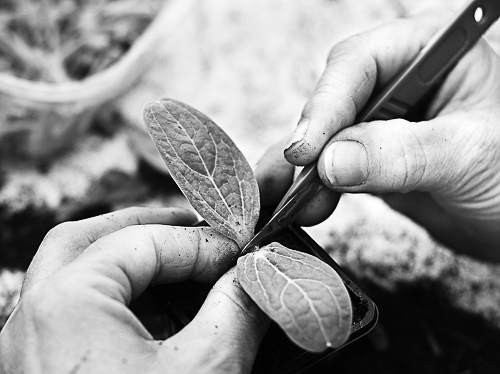
    We visited a nursery called Vivaio Pensalfine located near the coast of the Tyrrhenian sea and Capalbio Calo. This nursery is producing melons, tomatoes, asparagus, squash and aubergine.

    Fertilised seeds are bought from Korea, France, the U.S. and Japan. A plastic tray containing a matrix of small holes is used as a home for the seeds, that is, each hole is filled with a mixture of dark turf from the Black Forest in Germany and light turf from Lithuania. Then, an inert material is applied on top of the seed in order to preserve the humidity of the seed in order to assure that the seed germinates. Finally, another layer of the turf mixture is applied on top of the inert material. Next, the trays containing the seeds and the turf are put into a room with high humidity and a controlled temperature always between 25 and 27 degrees centigrade. Then, after some time the seed will grow into a minuscule plant with two leaves. When a third leaf is formed, the incubation period is finished and the next phase can begin. This phase, consisting of taking a part of one plant, making a cut in another plant, putting the stem of the first plant inside the cut of the second plant before applying a spring clip which will enforce a small pressure on the host plant, is called grafting. The purpose is to make the plant being inserted into a host plant more resistant to diseases. We were watching this operation where a watermelon plant was grafted to a pumpkin plant. The roots of the pumpkin has a large resistance to diseases, and the watermelon which is being grafted will inherit this resistance. In fact, the pumpkin plant is also able to accept a melon plant. Another combination is grafting an aubergine plant to a tomato plant. In order to do this operation, a tiny cut in the host plant between its two main leaves is done with a scalpel. Then, the roots of the plant to be grafted are removed before a tiny transversal cut is done to its stem. Finally, the stem is inserted into the cut and a spring clip will apply a light pressure around both the host plant and the grafted one. In this way, the host plant will bring nutrients to the grafted one.

    During the growing phase, new leaves on the host plant will often start to grow, but they will have to removed since they will “steal” nutrients from the grafted plant. When the composite plant has grown to a size of about 10-12 centimetres, the spring clips around the host plants are removed, and the plants are sold to other nurseries.

    Wednesday 25 March
    selva_w500

    Photo gallery

    Map reference

    Web site

    A farm called Azienda Agricola Biologica “La Selva” located at San Donato, Albinia. La Selva is a farm in which organic agriculture, which has been tried and tested in various ways for about 30 years, is practised.

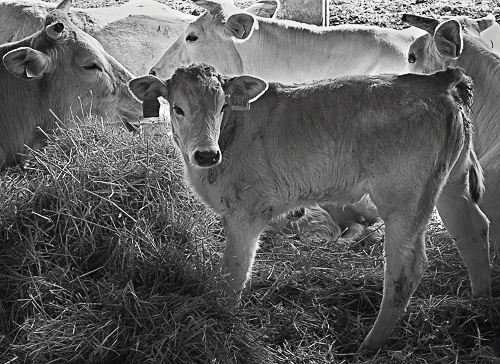
    The cows being raised at the farm are native to Tuscany and are called Chianina because they were traditionally raised in the valley of Chiana. In fact, it is the same race that were used by the Romans, but only for the meat and not for the milk. The calves are born at La Selva and stay with their mothers for 6 months. Then, the animals are separated by a fence, but they are still able to meet each other. In this way, both the cow and the calf will avoid the stress which occur when they are forced to separate soon after birth. It also has a beneficial effect on the quality of the meat, which is sold to restaurants, etc.

    Both the cows and the calves live in large sheds consisting of a roof held up by steel columns and they are free to walk around the shed. They eat hay mixed with cereals and vegetables in addition to clover and they are never force-fed in order to obtain a specified weight in the shortest possible time. All the fodder they are eating is strictly organic. At the age of 12 to 18 months, some of the calves are sold for meat. About 25 Chianina cattle live outside all year. They consist of two bulls, about 15 cows and heifers, while the rest are calves. Every 4 years, the bulls are replaced in order to avoid in-breeding since the calves become mature after 4 years.
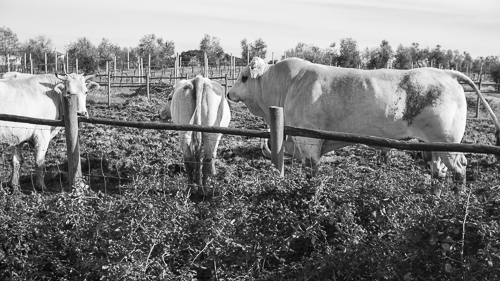
    Appennin sheep are also being raised at La Selva and they are grazing on land which is only being slightly farmed. The Appennin sheep originate from the centre of Italy and is only used for meat. Thus, the lambs are fed by their mothers until they are either sold for meat or they are gradually weaned off drinking milk.

    The hay, on which the cows walk, together with the their dung are used to fertilise the fields. In addition, a cycle running for 6-8 years is practised for cultivation of harvests. By using plants the first 3 or 4 years, which provides nutrients to the soil and only using the last 3 or 4 years for growing plants for food, a gradual impoverishment of the soil is avoided. Instead, the succeeding plants get nutrients from the preceding plants left in the soil.

    Regarding parasites feeding on the harvests, chemical pesticides are not used. Instead, insects like, for instance, ladybirds, which live in small forests spread around the farm feed on the parasites. The farmland of 450 hectares is divided into various areas for growing fruits, cereals, vegetables and fodder. Almost all the products from La Selva is sold in Italy, while a small part is exported to Germany. Only 10% of the production of fruits and vegetables are sold in their own farmer’s shop.

    Friday 27 March
    colonna_w500

    Photo gallery

    Map reference

    Web site

    We drove inland in the Maremma towards a farm called Aia della Colonna, which has been run by the Tistarelli family since the early 70s.

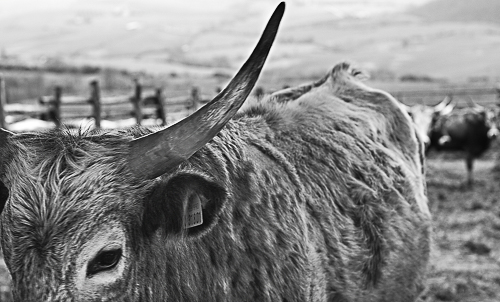
    The farm is located on the top of a hill and it is surrounded by rolling hills and valleys filled with maquis together with forests. The Tistarelli family has been doing organic farming since 1995 where they are reintroducing and increasing the use of the ancient bovine race called the Maremma cow. This cow has been used at least since the time of the Etruscans as work animals and for their meat.

    Fortunately, other farmers have also begun raising Maremma cows for the meat. Until only a few years ago, this cow race was little appreciated because of its large size and also because the race has not been bred for milk, meaning that it will probably not produce as much milk as dairy cows. Instead, the Maremma cow is appreciated for its tasty and meagre meat. An evident characteristic of these animals are their long and wide horns. About 100 cattle are being raised by the Tistarellis consisting of cows, heifers and calves which are dependent on milk. While the cows and the calves can roam more or less freely within a range, the heifers which are ready for selling are collected in enclosed areas where they are being fed hay, clover and fodder grown organically at the farm. In order to move the free-ranging cows and the calves, cowboys (yes, they still exist and they are called butteri in Italy) are used since the cows are very protective of their calves and can easily kill someone with their big horns.

    In addition to raising Maremma cattle, a pig race called Cinta Senese, which were originally raised near Siena, is also being raised at the farm. The pigs have a shed, but are free to go outside whenever they wish. Sheep are also being raised and the lambs stay with their mothers till they are weaned off. The wool is not being used due to that it requires too much work. The Tistarellis also raise chickens which are a cross between two ancient breeds of chicken. The hens are free to walk around inside a fence and they also have a shed for laying eggs.

    Besides growing fodder for the animals, the Tistarellis are also growing olives and vines. The olives and the vines are only for personal consumption and their guests since they also have rooms for rent. They also have premises for treating the meat from their animals, and the products are sold at their own farmer’s shop.

    Production of sausages are done using tried and true methods, that is, they are only using salt to preserve the meat and no preservatives are added. The products are sold to restaurants, wine bars, and so on. The salamis are much appreciated, especially in Tuscany where bread without salt is traditionally being used. The mix between the salted meat and the bread without salt gives a delicious taste. It is recommended to use a red wine called Morellino to accompany this meal. For the modest sum of 15 euros each, we were served a delicious meal consisting of wide selection of their meat products together with bread and wine.

    Various types of meat products are sold (the Italian names are included):

    • seasoned sausage – la salsiccia stagionata
    • a type of salami from Maremma – l’ammazzafegato
    • salami – il salame
    • chine of pork – l’arista
    • bacon – la pancetta
    • lard from the pig’s cheek – il guanciale
    • ham – il prosciutto
    • lard – il lardo.

    The products are sold in the vicinity of and in Tuscany.

    Monday 30 March 2009
    augusto_500

    Photo gallery

    Map reference

    We went to the neighbour of Vivaio Pensalfine called Azienda Agricola Augusto Petroselli, who are producing melons and watermelons in greenhouses and in open fields.

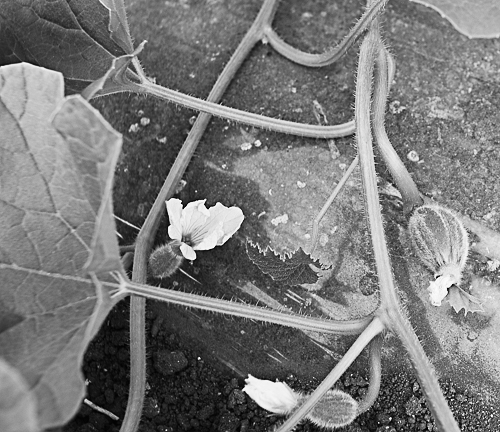
    The seedlings which are planted at this enterprise are bought from the Vivaio Pensalfine. Thus, they are buying seedlings which are resistant to disease, more likely that the seedlings will take root, greater growth rate and productivity. The hot and humid climate inside the greenhouses means that planting the seedlings can be started as early as February since no heating is provided to the greenhouses. Instead, heating is provided by the sun. The seedlings adapt well to being planted in the greenhouses and blossom in March. In the blossoming phase, pollination is ensured by means of bees, which live in the same greenhouse1. The female flowers turn into small fruits after having been pollinated, and the melons are ripe in May. Then, the primary harvest and sale of melons are carried out. In March and April, a new batch of seedlings are planted. The first ones are protected by a tunnel2 made of metal bows supporting a “roof” of cellophane which functions as a “house without floor” around them. Before the second ones are planted, a layer of cellophane is laid on the ground . This layer, which serves to hinder evaporation from the soil, has regular holes in it where the new seedlings will be planted. In addition, a tube with minuscule holes occurring at the same distance as the holes in the layer of cellophane is put along the seedlings. The holes let each seedling receive water, drop by drop, which seems to be a very efficient way of artificial irrigation. Thereafter, all the seedlings are covered with some kind of textile held up by metal bows. This “roof” protects the seedlings against diseases and parasites, but it is also porous in order to allow them to breathe. The seedlings which are grown in the tunnels are ready for harvesting in June, while the other ones are ready for harvesting in July/August.

    1. The melons inside the greenhouses have male and female flowers and bees are used intentionally, while ants are also doing some pollination. The female flower turns into a fruit after pollination, while the male one, withers away. A beehive is kept inside some of the greenhouses in order to ensure pollination.

    2. Inside the tunnel, the temperature can exceed 60 degrees centigrade making it necessary to make small holes at the end of the tunnels. The sizes of the holes are gradually made larger as the seedlings grow larger. This also has the desirable effect of letting insect pollinators enter the tunnel.

    Thursday 2 april 2009
    fonterosa_w500

    Photo gallery

    Map reference

    We drove from Orbetello, via Manciano and Pitigliano towards Sorano when we arrived at a farm called l’Azienda Agricola Biologica Fonterosa di Piero Bigi.

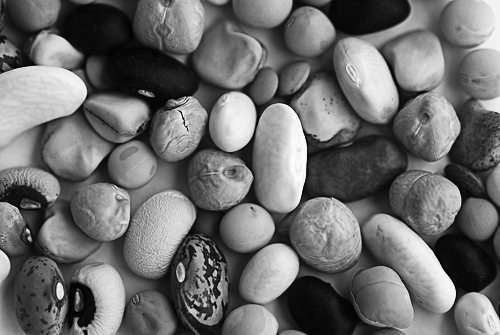
    This family farm is run by Mr. Piero Bigi who wanted to reintroduce traditional cultivation in the early 80s. Now, he is cultivating organically the following legumes:

    • Bean – Fagiolo Ciavattone di Sorano
    • Kidney bean from Sorano – Fagiolo Borlotto nano di Sorano
    • Bean – Fagiolo Cannellino di Sorano
    • Name in English??? – Cicerchie di Sorano
    • Wrinkled chickpea from Sorano – Cece Rugoso di Sorano and one type of garlic called:
    • Red garlic from Maremma – Aglio rosso maremmano

    The possibly corresponding names in English have been put in before the original names in Italian in the list above.

    Mr. Bigi is aided in searching for new legumes and cultivating them by the University of Siena. Together, they are also controlling the selection of seeds, the various phases of cultivation, and the storing of the new seeds are performed in accordance with the requirements to organic farming. Mr. Bigi told us that during searching for original seeds for the above mentioned legumes, he met a 103 year old woman farmer who was still cultivating wrinkled chickpeas from Sorano. She told him that her grandparents were cultivating the same type of legume. It seems like most of the legumes cultivated by Mr. Bigi originally arrived in Europe about 300 years ago, having been exported somehow from Central Africa. All the legumes together with the garlic cultivated by Mr. Bigi are officially recognised as traditional products from Maremma or Sorano by the Tuscan Commissione Regionale. The farm is located in the area of tuff, a volcanic rock. The tuff originates from volcanic ash and lapilli from the ancient volcanoes of Bolsena and Mezzano in distant geological times.

    The abundant content of potassium in the tuff lends the following characteristics to the legumes:

    • Absence of a “shell effect” on the outer skin of the legume, produces an effect like it is “melting in the mouth”.
    • A rich and intense flavour.

    Planting legumes has the beneficial effect that it enriches the soil because they release nitrogen into the soil which also fixes carbon dioxide from the air. When planting, the legumes are planted on pieces of ground which are far from each other, in order to avoid pollination which could have caused hybridisation. No fertilisers, no insecticides and no weed-killers are applied during cultivation of any of the products. Collection of the finished products are done manually. All of the above mentioned legumes are fundamental ingredients of the courses in the Mediterranean diet and the Tuscan kitchen.

    Friday 3 april 2009
    rustici_w500

    Photo gallery

    Map reference

    Web site

    Instagram

    We drove just a few kilometres from Orbetello in order to reach a place called San Donato where a farm called Azienda Biologica e Agriturismo Rustici is located.

    We were showed around by Giuseppe Rustici, who runs the farm in cooperation with his father, his brother and their wives. Besides, they employ 8 people. Originally, the whole area around the farm was marshland, but it was reclaimed by draining during the 1950s.

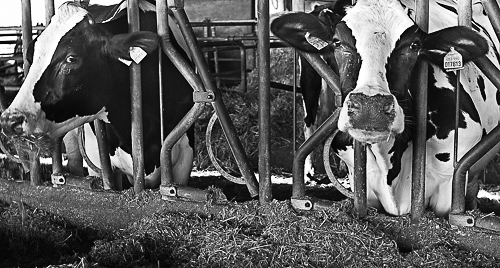
    In addition, the land which was formerly owned by absent landowners were divided up and given to independent peasants. Now, 60 years later, the farm has about 100 Frisone dairy cows which are only meant for milk production. In addition, they are raising Maremma cows in an enclosed space and a mix between Limousine-Chianina which live in another enclosure nearby. While the dairy cows live inside a shed, but where they are free to walk outside, are inseminated artificially at regular intervals (60 days after having given birth, i.e. annually), the cows living outside are inseminated by bulls.

    The farm has two Maremma bulls and one mixed race for this purpose. The Rustici brothers together with their father have decided to run the farm as an enterprise run in an organic way. This means first of all to let nature run its course and not to push things, e.g., the time between the birth of a calf and another insemination of a dairy cow is extended from the minimum one month period to two months. Besides, cultivation of the harvests and treatment of soil are done organically, the animals are treated as well as possible, new and genuine products are continually developed and brought to market. The Rustici family has been trying for several years to promote the sale and the consumption of raw milk. Raw milk is the milk which has been milked from the dairy cows and not treated in any way, except filtration and refrigeration at 4°C.

    This leads to several properties which are highly appreciated by their customers:

    • raw milk is easily digestible, containing enzymes in an active form and aiding in improving intolerance to drinking milk.
    • raw milk aids in absorption of calcium because it conserves phosphates. Instead, heat-treating the milk will prevent this property.
    • raw milk contains large amounts of unsaturated fats which are fundamental for the human body, gives energy to the body, aids in eliminating toxins and maintains the elasticity of the veins.

    Among the initiatives of the Rusticis for taking care of the environment is to extend their organic cultivation to neighbouring farms.

    The advantages are twofold:

    • restore the original organic components by preventing all use of pesticides, weed-killers and other chemicals.
    • provide fodder, cereals and legumes necessary for the nutrition of their animals.

    The Rustici farm has been officially recognised by a regional corporation called ARSIA and has received a certificate of conformity guarding the rules of running farms organically. The certificate has to be renewed at regular intervals. The health of the dairy cows is closely monitored. Each cow is furnished with a pedometer which monitors their movement, while the amount of milk each cow produces is also recorded as a means of detecting health problems at an early stage.

    The calves are separated from their mothers immediately after birth, but the calf is completely dependent on drinking the milk of its mother for the first 10 days of its life. Thereafter, it is fed milk from the other dairy cows for another 80 days. Thereafter, the calves are placed together in enclosures where they are free to be inside a shed or walk outside on a meadow. As the calves turn into heifers, they are placed in another enclosure until finally “advancing” to be dairy cows at which time they will join the other ones.

    The raising of cows outside (about 50 Maremma cows and about 70 mixed race cows only meant for meat production) take place about 25 kilometres from the Rustici farm near a town called Magliano about 150-200 metres above sea level. They live in a beautiful area consisting of hills and valleys covered with maquis and with a view of the sea. Ancient fountains nearby are used to provide water to the animals.

    In summer, the Maremma cows, which grow slowly, needing large open spaces and being able to move long distances, are moved to other meadows nearby where they are able to live off the land, whereas they are fed by the farmers in winter. Among the agricultural rotation techniques reintroduced by the Rustici brothers which is beneficial for the soil is called green manure. By means of this method, one type of plant is used to prepare the soil for multi-year plants the next season.

    A suitable plant for this purpose is called favino in Italian and probably mangetout in English, a legume which makes it possible to obtain the following main objectives:

    • after having spread dung from the cowsheds, the legume called mangetout, which collects nutrients from the dung, is seeded in the same place. Thus, when growing, it will transform the dung into elements which will enrich the soil after the plants have died.
    • the mangetout prevents other plants from growing up in the same area in which it is growing.
    • after the mangetouts have died, they are left on the field, thus providing a natural weed-killer.

    Besides, all legumes enrich the soil with nitrogen. Before a new cultivation is applied, the plant residues are mixed mechanically providing nutrients or green manure to the new cultivation.

    The Rustici family has lots of ideas for expansion of their farm, not limited to extending their land or raising more animals, but also to receive tourists. In fact, around the meadows used by the cows, numerous paths are situated which are suitable for both hiking and mountain biking and they are ready to accommodate groups, who want to spend their holidays in the countryside. They also serve food based on their own locally grown and raised food together with their un-pasteurised or raw milk.

    Monday 6 april 2009
    belvedere_w500

    Photo gallery

    Map reference

    We drove from Orbetello through Manciano and just before reaching Pitigliano, we turned right towards Farnese. Just a few hundred metres afterwards, we reached the farm called Azienda Agricola Belvedere situated on top a hill.

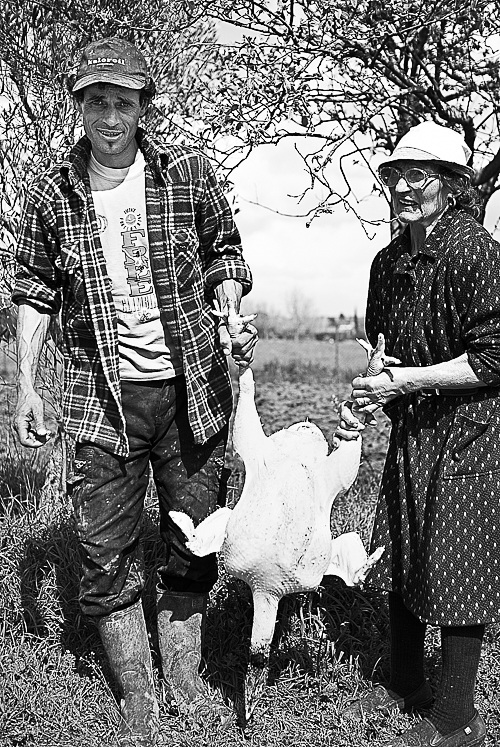
    One of the first sights which met us on arrival was Giancarlo’s, the owner of the farm, 75 year old mother slaughtering a turkey. Later, we were also watching her slaughtering a hen and a rabbit. A very unusual sight, indeed, for a city guy like me! However, the other free-ranging chickens seemed not to notice at all or just showing utmost indifference that two of their brethren had just been finished off!

    The Belvedere farm being situated between the Tuscan commune Pitigliano and the Lazian commune Farnese, resides on very fertile soil although it is outside the zone of tuff. All the countryside around the Belvedere farm was owned by large landowners up until the 1950s when an agricultural reform abrogated this custom and gave the land to the peasants. Giancarlo’s mother could still remember her grandparents had the right to stay in the farmhouse, but having to give half of whatever they produced to the landowner. After the agricultural reform, the family of Giancarlo has extended the area of the farm to 150 hectares by buying up land and by inheritance.

    The principal plants which are cultivated at this farm are olives and grape-vines. The vines are mainly Sangiovese, Cabernet and Rosso di Sorano where most of production is sold to wine-merchant called Cantina Sociale. However, the pride of Giancarlo is the wine cellar, dating from the 1400s and facing north to avoid the sun, which has been excavated below the family’s house. We were invited to taste his Rosso di Sorano which had an excellent taste.

    Regarding the olives, Giancarlo cultivates three types of olive trees, Cannino, Leccino and Frantoio, which have some of the following general characteristics:

    • Cannino olive oil: tasty, pungent, forever young and can be conserved a long time.
    • Leccino: the Leccino trees are robust and not susceptible to cold spells. The olives are big and meaty, while the oil is light and delicate, but not suitable for long conservation. May be harvested in October-November.
    • Frantoio: not able to produce olives if the tree is subjected to low temperatures, but it produces an excellent oil which is aromatic and fragrant.

    The following animals are raised at Belvedere:

    • Milk-producing Frisone cows and meat-producing Limousine cows.
    • Meat-producing Cinta Senese pigs whose meat is sold both as fresh and as sausages, salamies, ham, lard, etc.
    • Meat-producing Appennin sheep.

    In order to enrich the soil, dung is used, while no chemicals are added. The Belvedere farm has not been recognised as an organic farm due to too much bureaucracy. We were also shown a field of rapeseed which was only used for fodder for their animals and not for making vegetable oil.
