Blog

  • Oana – bean to bar chocolate maker

    A part of Aona's chocolate collection

    Web site
    Insta

    We went to visit Oana in the city of Sfântu Gheorghe where we were met by her and her husband, who is running a bike workshop next to her chocolate workshop. While he was cleaning a chocolate tempering machine by melting the remaining chocolate with heat guns, Oana showed me how she makes chocolate.

    Chocolate tempering machine
    Chocolate tempering machine

    Spots of cocoa butter are visible on the surface of the chocolate if not done correctly, a phenomenon, which is called crystallisation. An interesting video about crystallisation can be watched here. Oana wants the surface to be shiny, smooth and brown, which she obtains by extracting liquid chocolate when it has the correct temperature. She was using an infrared thermometer to measure the temperature of the liquid chocolate.

    I’ve been to three other chocolate makers in the county of Hargitha in Romania, one in Norway and another one in Spain, but Oana is a the only one who makes chocolate from cocoa beans, called bean to bar and she imports the beans from Peru and Nicaragua. This means that she needs to process the cocoa beans before she can use them to make chocolate.

    Quote: Bean to bar chocolate is chocolate that is made from scratch by the same producer, starting from the raw cacao beans and ending with the finished chocolate bars and treats. This process allows the chocolate maker to control every aspect of the chocolate making, such as roasting, grinding, conching, tempering, and moulding. Bean to bar chocolate is often more flavourful, nuanced, and ethical than mass-produced chocolate. It reflects the artistry and craftsmanship of the maker and the quality and origin of the cacao. Unquote.

    She roasts the cocoa beans in an oven to develop flavour, kill bacteria and loosen shells, next she’s cracking the shells and blowing them away, leaving the nibs behind. Next, she grinds the nibs into a thick paste known as “cocoa liquor”.

    Grating cocoa butter above melted chocolate and mixing them together.
    Grating cocoa butter above melted chocolate and mixing them together.
    Mixing liquid chocolate with tahini and salt
    Mixing liquid chocolate with tahini and salt

    She melted cocoa butter and poured it into a small tank with liquid chocolate. Next, she poured crushed tahini on top of the mixture, finally she added a little salt. Afterward, she stirred everything together to make a chocolate paste.

    Thereafter, Oana inserted a knife in another chocolate bath, put it in a fridge and took it out after some time and found that the liquid chocolate needed to stay longer in the heater. Only for a demo, she poured the chocolate in a mould, scraped off excess liquid chocolate and shook the form to get rid of bubbles. Due to limited time, she would put pistachio in the liquid chocolate later.

    Pouring liquid chocolate in a form and turning it upside down
    Pouring liquid chocolate in a form and turning it upside down
    Chocolate bars on pistachio with and without packaging
    Chocolate bars on pistachio with and without packaging

    I got to taste the chocolate with pistachio, and it was delicious.

    Oana also showed me how she folds paper around her chocolates, and she made it seem easy.

    Folding paper around a chocolate bar
    Folding paper around a chocolate bar
    Hot chocolate and ceremonial cocoa
    Hot chocolate and ceremonial cocoa

    Her company is called Kokowa and I asked her if it was her last name. Instead, it’s a pun on cocoa and Wanna, her name in Romanian.

    In addition to being an excellent chocolate maker, she’s also good at punning. She’s also producing various types of peanut butter as shown below, they are called peanutter and pawnutter where the last one is peanut butter for dogs. In addition, she’s selling hazel butter as hazelnutter, almond butter as almonutter, cashewbutter, caju in Romanian, as cajunutter.

    Peanut butter collection
    Peanut butter collection

    The Krausz chocolate company is located some distance from this one.

  • Norbert and Tímea – poultry farmers

    Some of the hens at this farm

    Place: Csíkszentdomokos or Sândominic

    Several times when we went to visit someone, I thought that we had arrived at the wrong place. Having arrived in a village and turned left onto a grassy cul-de-sac, I thought that my driver had made a mistake for a change. Instead, having called someone in Hungarian, he reversed his car and parked it on the opposite road. Next, we walked to where we had just been and entered a gate where a young couple were waiting for us. They were Norbert and Tímea, a married couple in their 30s and their young daughter.

    Their house and the chicken farm were located next to each other, and both were fenced in to prevent the hens from running away and hindering foxes from entering the courtyard. The house and the surrounding property originally belonged to Nobert’s parents, and he had inherited it.

    They had 5 goats, but they sold them because a male goat was aggressive when Tímea was pregnant, and she was afraid of getting hurt.

    They stayed 7 years in the UK, working in hotels as cleaners in Brighton, learning the language and having a good time although they weren’t satisfied with the food they were eating. Both prefer a slow life and not earning a lot of money, meaning that they went back to where they came from, that is to the farm where Norbert grew up.

    They don’t throw away food, they want to know where their food comes from, and they buy honey from local beekeepers. They have planted apple trees, which give shade to the chickens, and they also eat the fallen apples. They make their own bread, and they receive leftovers from some restaurants, but they aren’t allowed to do dumpster diving. The parents of Tímea have pigs, from which they can get meat, they buy milk from one of their neighbours.

    They started raising chickens as a hobby, then they increased the number of chickens to 400, while now they have about 250. They have been raising chickens for 4 years and they are still learning how to do it. They can’t get advice on raising more than 200 chickens even though they behave very differently from 20. They buy 100 chickens at a time, costing about 1000 euros, but they can’t see which sex they have upon arrival at their farm. Anyway, the male ones are slaughtered and eaten when they are recognized. In fact, Tímea and Norbert kindly invited us into their house where they served us lunch consisting of soup made from the meat of some of their male chickens.

    Foxes are trying to attack the chickens and sometimes they kill several at a time. Their three dogs stay with the chickens and that’s why they don’t have traps for the foxes. In addition, they don’t hunt.

    Norbert works as an electrician at Csíki Sör brewery , but he doesn’t drink beer, he’s very occupied with fixing the machines, though. Tímea stays home with their daughter.

    In addition to cereals, they only give the chickens vitamin D and calcium. A young female veterinarian is very helpful even though she knows very little about chickens, and she can identify what they need. The main diet of the chickens is cereals.

    The house where the hens are sleeping at night

    The hens may peck each other, if they see blood, they will keep on pecking. At dusk, everyone goes inside the small house. Next, they close the door to keep foxes outside. They stay inside at night on wooden racks, some of them stay in a corner of the house. The chickens produce about 1000 eggs a week. They have adjacent houses with straw on the floor where the chickens lay eggs and their owners pick the eggs twice a day. They have a separate house for the youngest chickens, that is up to 1 month.

    Water tubes

    In winter, they give the chickens hot water every 2 hours, while in summer they can drink from tubes with holes.

    After lunch, we went to their egg house a few minutes’ walk from their house. It was located next to the food shop.

    Egg house where customers can buy eggs at any time

    The egg house was called Szapona, which was a bad nickname of Norbert’s father. The egg house has a fridge with max 10°C and people can pay with cash. The egg house is monitored with 2 cameras. Of course, they can’t compete with commercial chicken farmers and the egg prices of this couple are somewhat higher than the shop prices. Some customers pay too little or too much, but, in general, it’s averaged out over time
    Some people just want eggs, and they don’t care about where the eggs come from.

    There is a great demand for eggs at Christmas and Easter.

    The price of chicken feed has risen substantially after Covid, and they have been thinking about giving up raising chickens, but they keep on doing it. In fact, Norbert wants to be a full-time farmer and both want to raise rabbits for meat production.

    Indian ducks

    They have Indian ducks for fun, and they eat snails, while their eggs and meat are inedible.

  • Lóránt Farkas – baker

    The owner baking bread

    Place: Csíkjenőfalva or Ineu

    Having gone to the village of Csíkjenőfalva or Ineu, we entered a gate to the garden of Lóránt Farkas where we passed his house, various trees, a well, free-ranging hens, and lots of firewood for his oven. Next, we entered his workshop where he was busy baking bread. In fact, he starts making bread early in the morning, and he had already completed kneading pieces of dough and put them in baskets for leavening.
    He’s a baker and a cook, but he also does other types of work. During our visit, he was making sourdough breads for friends and family, about 15 in all. In fact, he‘s using the same sourdough as his grandmother started 80 years ago.

    2 millers, one 14 years old and one 85 years old in the village, are providing him with flour, while local farms provide the cereals.

    He told my guide that he makes spice mixes from herbs in the mountains. In addition, he had hung up bundles of herbs on the wall of his workshop.

    Bundles of dried herbs hanging on the walls

    He’s using 7 types of flour:
    ⦁ wheat
    ⦁ rye
    millet
    semolina
    buckwheat
    walnut
    Graham

    In addition, he’s using salt from the town of Corund.

    He thinks factory bread is not good.

    Kneading the dough

    Having entered his workshop, we could watch him making bread manually, kneading the dough, applying flour to the dough, weighing the correct amount of dough and putting it in baskets.

    Finished bread

    He was using a wood-fired oven made of clay. Upon arrival, he had heated the oven, and he was busy kneading pieces of dough, weighing them with an old-school weight, cutting off excess dough and putting the required amount of dough in each basket. Interestingly, he was using a mortar and pestle with stones as a counterweight to the dough, using an old-school weight.

    Extracting a bread from the oven

    When he baked all the bread, he emptied the oven of ash, next he put some boards in the oven and fired them up.

    He bakes bread 3 times a week, and he ferments vegetables and fruits.

    He delivers the bread to friends and family, and payment is done by bartering like palinka, cold cuts, etc., with no money exchange.

    He was raising ostriches in the past: he got 4 horses, 2 goats and 2 pigs for one ostrich chicken.

    The wooden handle to put breads in and out of the oven. Lots of bottles on a shelf.

    Near one of the walls of his workshop, there was a wooden handle leaning on a shelf filled with lots of glass jars. He used the handle to put pieces of dough in the oven and take them out when they were ready.

    He laid the bread on a table and put it in baskets when they had cooled down.

    When we were ready to leave, he kindly gave us two breads.

  • Grădina cu Struti Ostrich Garden

    Two ostriches in an enclosure

    Web site
    Place: town of Întorsura Buzăului, Covasna County

    Mr Bogdan Platon started the ostrich farm 5 years ago. In the beginning, he was interested in breeding ostriches, but he didn’t know anything about them. He bought some ostriches from other farmers, but it was very difficult in the beginning.

    Ostrich chickens

    When an ostrich lays an egg, he must steal it because the ostriches don’t take care of the eggs when they live in enclosures. However, the males are very protective and fast, but he has found a way of taking them. The eggs weigh about 1.7 kg. Next, he puts the egg in an incubator such that the egg is stored at the same temperature as the mother ostrich would have provided. After hatching, he keeps the chicken together with the other chickens. He told us that the first 3 months of the chicken’s life is very critical, and mortality may be high. All the chickens were khaki brown with lots of dark brown spots. In the wild, this is useful for hiding them against predators.

    Various ostriches

    As they grow older, they are released into the enclosures. There, two females and a male share space and the owner lets the male make both females pregnant.

    When the ostriches are ready for slaughter, he must isolate the selected ostrich in a corner of the enclosure and make it enter a trailer. Next, he drives to a slaughterhouse where a slaughterer slaughters the animal and divides up the meat. He sells the meat and the eggs to anyone who wants to buy it.

    There are no veterinarians he can call if the ostriches are ill.

    The ostriches are very curious, and they follow what he or anyone else is doing. He let an ostrich bite his hand, but he told us that they don’t bite hard. Instead, they have very strong legs, and we could see that they looked powerful. Besides, their feet looked powerful.

    Sometimes, males in adjacent enclosures may start fighting and they may destroy the fence separating them.

    Some of the enclosures had a rudimentary roof, protecting the ostriches against rain and snow.

    A trough at the base of the fences was filled with cereals which the ostriches were eating when they wanted.

    They stay outside all year, and they don’t mind cold weather like -25°C. He showed us a photo of one of their faces on an ice-cold winter day, and its hair was pointing in all directions.

    Lots of enclosures were located next to each other and each one had a grass cover.

    There were tables with parasols located along the long edge of the enclosures where guests could be served. We were served a delicious meal consisting of soup with ostrich bones, ostrich meat with polenta and a dessert.

  • Farmhouse dairy Putnoky-Csicsó Sajtok

    A man stirring a container filled with fresh milk

    Owner: Putnoky-Csicsó Barna
    Place: Nyújtód/Lunga

    We went to a farmhouse dairy in the village of Nyújtód/Lunga. From the outside, it looked like we had come to a bungalow with a second house, but once we entered the second one, we could see that we had entered a small dairy. It had a rather large stainless-steel tank and another one in copper where Mr. Putnoky-Csicsó Barna was stirring freshly milked cow’s milk.

    They have 15 Tyrolean grey cows next to their house.

    They make dairy products like
    cheese with cumin
    cheese with mushrooms
    mozzarella with cow’s milk
    ricotta cheese
    smoked cheese
    yogurt
    cheese rolls called sajttekercs. A recipe in Hungarian can be found here.
    cheese with blackcurrant homemade wine

    The last one was not made this year because the summer was too dry.

    To make mozzarella cheese, they lay cheese in lukewarm water, knead it, take out pieces and roll them into spheres. Next, they must stay in salt water for 2 weeks.

    Pieces of mozzarella

    He let us taste the mozzarella cheese, which was very good. An article about how mozzarella is made at an Italian farm is described here.

    During our visit, he was working hard to make cheese because he would sell it at a market on Saturday.
    He told my guide that cheese should be served at room temperature and not like I think many people do: eat it straight from the fridge.

    There was a storeroom in the basement and an adjacent room.

    The cheeses are stored in containers filled with brine, staying there for 3-4 hours per kg. Thus, a heavy cheese must stay longer in brine than a light one.

    Next, the cheeses are stored in a cool room on wooden shelves, while turning them upside down daily to expel whey and brushing them with salt water to prevent mould for 2 weeks. Thereafter, the same procedure is repeated every second day for 3 months.

    Barna had a tool which he can use to extract a sample of a maturing cheese, smell and taste the sample and then reseal the cheese. He’s also knocking on the cheese, listening to the resulting sound. Interestingly, bakers at a bakery in Sardinia  are knocking on their sourdough breads to listen if they have the right consistency.

    Separating whey and curd

    Occasionally, Barna put a perforated bowl into the milk in the copper container, next he used another bowl to scoop up whey, which had been filtered by the sieve. Finally, he emptied the bowl in a stainless-steel container. Later, he would reheat the whey to make ricotta cheese. That is, the whey is heated twice, and the remaining curd is extracted and used to make the ricotta.

    He also filled a glass with whey, and he gave each of us a small cup of it. He emptied the glass, and he told my guide that it was very healthy, and it contains lots of proteins.

    He occasionally stirred the milk in the copper container with a harp and gradually small aggregates, called curd, started appearing on the surface. To separate curd and whey, he transferred the whey to another tank.

    He holds free courses for those who want to learn about cheesemaking.

    He showed us a round shape on which he put a porous cloth. When the curd was ready, he would put it on the cloth which would filter out the whey. In addition, it would give the surface of the cheese an uneven surface.

    In 2012, he went to a 6-month course with Hungarian cheesemakers. After 5-6 years of making cheese, he went to Switzerland where he met a group of Swiss cheesemakers, one of whom had been doing it for 40 years. They taught him lots of details he didn’t know about.

    He holds events about cheese for kindergartens and schools and he lets kids come to the dairy where they can make strange shapes of the cheese.

    He said you can leave whey for 2-3 months; it will turn sour and it’s good for the veins.

  • King oyster mushrooms growing company

    King oyster mushrooms growing out of a block

    Place: Csíkbánkfalva/Bancu

    Having arrived a series of large buildings, we were met by a middle-aged man who led us inside one of the buildings where we were joined by his son, Péter Előd. He’s a young man, around 30 years old and he’s the main mushroom grower at this company.

    The mushrooms are called King Oyster mushrooms (Pleurotus Ostreatus) because of its shape. In fact, they started with growing the cultivated mushroom, next they changed to cultivating winter and summer oyster mushroom . They are growing on dead trees in shady, cool and humid places with little carbon dioxide in the wild, and to grow them inside a building, it’s necessary to imitate the conditions of their natural habitats.

    Péter’s father does administration, but he’s also helps with the growing. Other employees also helps with the production of the mushrooms, packing, etc.

    We were shown four halls full of racks filled with prism-shaped plastic blocks with mushrooms growing out from their surfaces, and we were told that they buy them from a company in Hungary. The substrate on which the mushrooms grow is prepared with, amongst other things, hay and corncobs. After having been pasteurized, mycelium (the vegetative part of a mushroom) is injected into the substrate. Afterwards the substrate is inserted into bags of polyethylene by means of a machine and the bags are perforated with thumb-sized holes through which the mushrooms can pass when they are growing, resulting in a prism-shaped block weighing about 25 kg.

    Blocks with mushrooms

    The blocks are transported to the village of Csíkbánkfalva/Bancu where Péter and the other employees put them inside any of the large buildings where they are protected from the sun and maintained at a constant temperature and humidity by means of large fans which draw out hot air. At the same time air passes a panel filled with cold water which cools the building and increases the humidity at the same time. In case of cold weather, the air passes warm water instead such that it is heated.

    After some time, the blocks must be replaced, and they are used as compost.

    Production of these mushrooms can’t be automated. Both Péter and the other employees live near the production halls, and they can control the state of the mushrooms at any time. This company has an app which can control humidity and temperature inside the production halls. In fact, Péter used his phone to turn on and off drizzle inside the hall.

    Some small-scale producers come to this company seeking help. They tell them that they must control the mushrooms manually, not just trust the measuring instruments. They also tell them that cultivated mushroom production can be automated, but not production of king oyster mushrooms.

    Racks with blocks containing mushrooms
    Racks with blocks containing mushrooms

    Some companies make the mushrooms grow faster by increasing the level of carbon dioxide, giving less taste and more soggy consistency, but at this company, they are only allowed to grow slowly, to give more taste.

    I have also visited a king oyster mushroom producer in Sardinia.

  • lu’Mazăre farm

    A donkey being milked

    When we arrived at the lu’Mazăre farm, we were welcomed warmly by the friendly couple Mazăre Gheorge and Ana. Having showed us a duck pond where there was watermill in the past, we were invited inside their kitchen. Both being very hospitable and agreeable, we were served coffee, tea, bread, smoked cheese, cheese with cumin, cold cuts, cakes, donkey milk and palinka.

    Besides, their daughter-in-law and her son were also present, while her husband were working as an administrator for a company. He also does all the paperwork for the farm and when Mazăre Gheorge and Ana retires, he will go on running the farm.

    They have a cattle farm, but they also have donkeys, sheep, pigs and various kinds of poultry (chickens, geese, ducks, turkeys, etc.) They sell both cow and donkey milk to a local milk processing company, but they also make all kinds of milk products.

    The farm was in a valley, and it was surrounded by rolling hills covered by forests. Mr Mazăre had always tried to expand the area of the farm, while his neighbours instead spent money on expanding their houses.

    When we went outside, we could see some ducks and geese wandering around the farm. Next, Mr Mazăre  made a young donkey rise so that his wife could feed him cereals. Next, we entered the barn where the pigs were residing in two enclosures, a group of young pigs in one of them and a sow with her piglets in the other one. The sow was let out of the barn and allowed to walk of the meadows next to the farm. We walked around the meadows where we could see some grazing cows and sheep. At the same time, we could hear a donkey braying.

    The owners led us to the donkey which was the mother of the young donkey which Ana had fed. Now, she started milking the donkey by hand. She put a bucket with cereals on the ground and the donkey could eat while she was being milked. In fact, it seemed like it didn’t affect her at all. She just accepted what was happening to her.

    We could see some geese and ducks enter a pond where they were swimming. Unfortunately, they left the pond when we were approaching.

    We were told that the dairies pay a higher price for donkey milk than cow milk, and the cows are milked by machine.

    In addition to the farm in the valley, Mr Mazăre had bought meadows on the hills surrounding the farm. We went by car to a farm; next we walked on meadows from which we could see his cows on other meadows. Mr Mazăre has brought an aggregate and a milking machine up to the cows and he or his wife are milking them by machine where they are.

    The landscape around the farm

    Summer 2024 was hot and dry, and they also had to bring feed and water to the cows. There are sources on the hills, but they were mostly dry during the summer. Anyway, he led us to a spring from which fresh water was flowing.

    To prevent bears from hurting the cows, they are surrounded by electric fences.

    When Mr Mazăre was a boy, he had to look after the cows, walking up the hills to the cows. Besides, people were living on the hills to avoid flooding, but they gradually moved down to the valley.


  • Papné Manufactory – herbalists

    A mixture of dry herbs

    Web site

    Insta

    Driving in the countryside on gravel roads and finally on a muddy one, we arrived at the property of the Szabó family.

    We were met by Ms. Szabó Adél-Júlia, who was a very agreeable woman. She was taught about herbs from a young age by her grandmother and her mother and her husband also learned about herbs from an early age.
    The company is run by Ms. Szabó Adél-Júlia and her husband, who work as a minister in a unitarian church and as a manager, respectively. In their spare time, they spend some of it growing and collecting herbs, drying them in the attic on hot summer days and using electrical dehumidifiers on cooler ones.

    A mixture of dry herbs
    A mixture of dry herbs

    First, we went to a small house where we were shown their dehumidifiers and their storeroom. All the herbs were stored in transparent plastic boxes. They had started storing them in cardboard boxes, but the dried herbs extracted humidity from the air and after some time, mold appeared. Then, they had to throw away the whole harvest and turn to plastic instead.

    Ms. Szabó Adél-Júlia opened each box and helpfully picked up some of the herbs from each one.

    The unitarian church and the old oak tree
    The unitarian church and the old oak tree

    After having showed some of the contents of each box, we followed her outside where we could see a huge 600-year-old oak tree located between the church and their house, while a tower was next to the church.

    Next, we crossed a cemetery before arriving at their field of herbs, where the field had been covered by canvas through which rows of holes had been perforated. An herb was growing in each hole, as expected. Some of the herbs were being grown without a canvas and they also were growing some currant bushes. They also go outside the property to pick herbs in the nearby forest.

    She teaches kids about herbs for free.

    They are producing herbal and fruit trees with the following ingredients:
    ⦁ spearmint
    ⦁ oregano
    ⦁ rose petals
    ⦁ lavender
    ⦁ lemon balm
    ⦁ stinging nettle
    ⦁ dog rose
    ⦁ chamomile
    ⦁ horse mint
    ⦁ elderberry flower
    ⦁ acacia flower
    ⦁ marigold
    ⦁ yarrow
    ⦁ eastern purple coneflower
    ⦁ stinging nettle
    ⦁ walnut leaf
    ⦁ isop
    ⦁ horse mint
    ⦁ spruce tips
    ⦁ monarda didyma
    ⦁ cowslip
    ⦁ raspberry
    ⦁ blueberry
    ⦁ apple
    ⦁ dog rose fruit
    ⦁ wild cherry
    ⦁ blackcurrant, white currant, and redcurrant

    The teas are sold in Romania and Hungary.

    I have also visited the herbalists Halasagi Csibi  and Balazs Dávid .

  • Mézeskalács Mühely gingerbread workshop

    Heart-shaped gingerbread

    Having arrived at the workshop of the Szanto family, we were met by Mr. Szanto József, whose family has been making gingerbread since 1880. While he went inside the house to change to traditional Szekler clothes, we could have a look at the small shop on the outside of the house. Various gingerbread figures were on display together with some shapes for shaping the dough. There were also some tables and chairs where their customers could enjoy the taste of their gingerbread.

    Next, we were led into the workshop where a large wood-fired oven took up nearly half the space of the workshop.

    To add taste to the gingerbread, they use spices like cinnamon, anis, clove, etc. They are grinding the spices manually.

    They make the dough in a trough using fine wheat flour, mix it with honey, let it leaven one day, next, they flatten it with a huge roller. They had their own flourmill in the past, but not anymore. Nowadays, they buy flour from a miller in the town of Miercurea Ciuc.

    Some time before the dough is ready, they fire up wood in the oven, and when they are turned into embers, they turn them to the left and the gingerbreads to the right, which stay there for 7-10 minutes. After about an hour, they must reheat the oven.

    The next day, they add royal icing, consisting of egg white, sugar and food colours. Anyway, they use one colour only a day to avoid colour mixing.

    Gingerbread with mirror

    A legend about gingerbread with a mirror: a boy and a girl go to a market, he buys gingerbread with a mirror, if she checks herself in the mirror, she likes him, her mother takes the gingerbread and gives it to the couple when they get married.

    The owner decorating the gingerbreads with royal icing

    Mr. Szanto József decorated several gingerbreads with royal icing during our visit, and he even let me try it. As usual, even if an artisan makes what they are doing seem easy, it requires some practise.

    I and another guide visited another gingerbread workshop some years ago. There, the owner told us about the history of gingerbread, which may be worth  reading.

  • Attl Robert – beermaker

    A glass of Roblipa beer at the GADO restaurant

    Place: Sfante Gheorge

    We went to visit a young man called Robert Attl, who, together with a friend, had started brewing beer in a garage when Covid started in 2020.

    The beermaking set

    They had bought a complete set for brewing their own beer together with a temperature controller and they started making various types of beer. Upon completion of a batch, he gave samples of beer to friends and family. Since they liked it, he went on making many types of beer before he settled on New England IPA  and the taste is governed by 5 types of American hops. In addition to hops, he also buys malt and beer yeast.

    When he wants to make beer, he starts by crushing the malt in a mill, then filling a tank with the crushed malt and water. This mixture is heated to about 72°C for a certain time, then he separates the malt, which is called mash, and the water, which is called wort. He boils the wort for some time, then he puts a cage with the hops in the wort. Next, he cools the wort and he adds beer yeast to the malt. Finally, he stores the mixture of wort and yeast for a period during which the sugar in the wort will be turned into alcohol, making beer. Next, he filters out the yeast and bottles the beer.

    Having seen his small home brewery, we went to a restaurant called GADO whose name is composed of the initials of 2 ladies and 2 gentlemen. GADO restaurant has its own magazine, the GADO times, where each of them is drawn as a human with an animal’s head. They are the following characters:
    Greta with a cat’s head
    Alfonz with a boar’s head
    Dalma with a mouse’s head
    Orlando with a deer’s head

    Having read an issue of the GADO times, I have realized that the GADO people have a lot in common with the Slow Food philosophy of good, clean and fair. They are, as far as possible, buying foods and drinks from local producers and they gather honey, berries, vegetables, herbs, fruits and water from nearby sources.

    The reason for going to this restaurant was that Robert had started working there. He started hosting beer tastings at the restaurant with 15 participants in the beginning, but now about 45 people attend his tastings.
    He has learnt about the history of beer, beer chemistry, got to know and made friends with a lots beer lovers.

    Pouring Roblipa beer in a glass

    His beer is called Attl Roblipa where Attl is his last name and Roblipa is a pun on Robert and IPA. His New England IPA has a taste of hops from passion fruit, elderflower, grapefruit, mango and and one more plant. It’s a cloudy beer meaning that it’s hardly transparent. It’s produced at the Mustata de Bere brewery in the city of Brasov.

    Some photos of his beer can be found here.

    I was kindly invited for a free Roblipa by Robert, and I can confirm that the beer was very tasty. I have also tried a few of their dishes, all of them delicious.

    As a measure of the good quality of his beer, his father didn’t drink beer before Robert started brewing beer. Now, he drinks all types of beer, Roblipa and anything else.


  • Kovács Mihály -Pig farmer

    A mangalitsa pig eyeing the photographer

    Web site

    We met Mr. Kovács at a parking space because the road from there to his farm was only passable for a 4WD. Having entered his car, he drove us up a hillside, sometimes feeling that we were moving more sideways than straight ahead. Having arrived at his farm, we could see a haphazard collection of fences, enclosures, buildings, a silo where a man was working and lots of mud. Fortunately, he gave me some simple plastic covers for my shoes, else I couldn’t have entered his farm.

    A man letting cereals fall into a tractor.

    Mr. Kovács has one assistant, a man who has grown up on a farm and is used to handling animals.

    Mr. Kovács has about 350 pigs and 500-600 poultry consisting of hens, chickens, guinea fowls, geese and pheasants. He was raising mangalitsa pigs as a hobby for 15 years, then it turned into a full-time job since he likes working with animals and being in nature.

    He’s running an organic farm cultivating organic cereals for pigs and he got an official license in 2021. There are only 3 certified breeders in Romania since there are very strict requirements for pig farmers, and he had to build a wall down to solid ground around his farm.

    When he wanted to start his farm, people from the nearby village had made an illegal garbage dump which had to be cleared first, and he had to remove 50 trucks of garbage. Next, he hired a company to find water which was located at 89 m depth.

    All the pigs are living inside a pen with an electric fence to keep them inside and bears outside. They must be inside the enclosure because they can be dangerous to people. Besides, bears can attack the pigs. They are free to walk where they want inside the enclosure, parts of it being turned into muddy fields by the pigs.

    The piglets were kept for themselves in a shed.

    Curious piglets

    There is a 180-year bloodline of the mangalitsa pigs, no artificial insemination is done, instead letting the pigs breed by themselves. The farmer shouted for the pigs to arrive, but only the small ones came, while the big ones were satisfied with eating acorns somewhere else.

    In hot summers, the pigs prefer to stay in mud baths.

    A meat processing unit, where mostly mangalitsa pigs and game meat is used to make cold cuts, is located in the city of Sepsiszentgyörgy/Sfântu Gheorghe a short distance away.

    Some male pigs are castrated when they are 2-3 months old, and they will be slaughtered when they are 24-28 months old, while the rest are used for breeding.

    Some hens and other poultry were inside fences, while a group of geese were wandering aimlessly wherever they wanted.

    Honking geese

    I have visited another man, Mr. Sándor Huba , who is also raising mangalitsa pigs.

  • Deák Mihály – beekeeper

    Some of the honeys of the beekeeeper

    When we were approaching Mr. Deák’s farm, more and more trailers and other industrial hardware started appearing. Upon arrival, I thought we had come to the wrong place, but after a phone call, Mr. Deák invited us into his workshop.

    There, he had set up a table with his honeys, some bread and some refreshments. Next, we got to taste all his honeys, each having a specific taste and consistency. He seemed to be hospitable, and the atmosphere was relaxed.

    Honey ready to be served

    He started beekeeping as a hobby, he spent 5-6 years learning how to do beekeeping, 10-15 years to become professional, and he has about 170 beehives.

    He is making gradual investments, and he gets some support from the EU. In addition, he has a loan from a bank.

    His bees produce honey from:
    ⦁ forest fruits
    ⦁ acacia
    ⦁ linden
    ⦁ spring flowers
    ⦁ rapeseed

    He has bought a machine for extracting honey and he’s able to extract honey for other beekeepers too.
    In this area, there are herbs in the fields and farmers let out their cows which disperse seeds. In general, there are few flowers in this area.

    Before rapeseed was only grown in southern Romania, but it has spread northwards due to global heating. Winters are getting milder and summers hotter. There was more rain in the past, which was bad for honey production.

    There are acacia forests near the Danube delta, and he follows the flowering of the acacia trees from the Danube delta northwards in the spring, extending the season about 3 weeks.

    He’s guessing where it’s flowering the most and he’s moving the honeybees at night because they must not be overheated. If they get nervous, they move more and produce more heat. In addition, honeybees travel only short distances to find flowers.

    He’s only selling honey products to consumers, and he has returning customers.

    He’s the President of the Covasna County Beekeepers’ Association.
    Quote: “The aim of Nectaria is to subject commercial producers and supermarket honeys of natural origin to quality control and professional evaluation, to appoint the Excellent Szekler Honey of the Year after organoleptic judging and top jury, and to reward honey producers in Szeklerland with prizes, medals and diplomas,” the organizers announced last year. At the same time, they support honey producers and promote their products, introduce beekeeping traditions and draw attention to the unique flavors inherent in the honeys of Szeklerland.

    Regarding what this year has been like for honey producers, Mihály Deák said that it is impossible to generalize, it matters a lot whether with a little luck the beekeeper manages to be in the right place at the right time. All that can be said is that the hopes attached to acacia blooms could not be materialized when they were rolled out, but on average this year was slightly better than last year. Unquote. Source.

    His son is studying mechanical engineering, father and son have a workshop where they build what their customers want in metal. Small things are built inside, while big ones are built outside. He can make things like a fruit press, tanks for farmers, etc., and he designs the structures by hand on paper. He works part-time as an administrator at a driving school and his son assists him with beekeeping.

    A new building for 5 beekeepers will be finished next year, and they will sell honey together.

    There are lots of hobby beekeepers, but the number of beekeepers is decreasing.

    The price of honey can’t follow inflation because people won’t buy it, and the EU imports honey of poor quality from some other countries.

  • Gardening for a Good Life

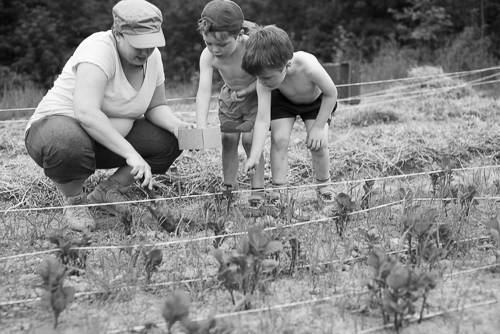
    Woman shows gardening to two young boys.

    Gardening can benefit the body, mind, and spirit, as well as help build human connections as well as the community. Whether you’re growing herbs, flowers, fruits, or vegetables, positive effects on your life will be part of the harvest you reap. Read on for tips from slow food supporters Slow Pix to learn more.

    Strengthen Your Body

    Getting a bit of sun while you garden increases your Vitamin D levels, which helps your body to retain more calcium, resulting in stronger bones and joints and even boosting your immune system. The Cleveland Clinic explains that the weight-bearing and resistance exercises from walking, digging, and pulling weeds can help to prevent osteoporosis, as well as strengthen your muscles and endurance.

    Revitalize and Calm Your Mind

    Studies of the effects of gardening on people with dementia found improvements in levels of stress, agitation, and depression; encouraged engagement with people and the environment; and reduced the amount of medication needed. Other research has documented that exposure to a bacteria common in the soil, M. vaccae, activates the release of serotonin in the brain, which can help with depression. One study suggests that gardening can help to improve memory and cognitive function.

    Nurture Your Connections

    Gardening with your family, friends, or neighbors can build stronger bonds with these people, according to VeryWell Family. A community garden is a great way to get to know neighbors, share produce with others, and connect with kindred spirits. Include your children in planning, starting, and maintaining the garden, as well as making decisions about who to share the harvest with. Whether your family has a garden on the roof, in a raised bed or other container, or in the ground, it’s a wonderful way to spend time in nature and develop pride in their work.

    Many people are learning to value having a dedicated garden space on their property. So, if you decide to sell your property in the future, you may find that your raised or in-ground garden will nurture your home’s appraisal as well as your relationships.

    Think About What You’ll do with the Harvest

    Whether you grow herbs, flowers, or produce, harvesting the results will be rewarding. You may want to give some away to friends and neighbors or donate to a food bank. You and your household may be excited about savoring the fruits of their own labor.

    Another option is selling your harvest. You might even consider starting a new company to pursue agri-business on a small scale, with the possibility of expanding later. Options for growing and selling mushrooms, Christmas trees, sod, flowers, herbs, or fruits and vegetables abound. You could sell your products at a farmer’s market, a roadside produce stand, or sell directly to restaurants or stores.

    Improve Your Own Quality of Life

    Besides the benefits of the process of gardening, you can reap rewards in the form of fresh fruits, vegetables, and herbs to cook with. If you prefer organic foods, you can make your garden an organic one, and control exactly what products your plants will be exposed to. Your family may be more excited about getting their daily servings of vegetables and fruits when they include homegrown tomatoes, strawberries, and peppers. Studies have shown that elementary school children who help with gardening, harvesting, and preparing the foods they’ve grown are likely to eat more vegetables. The outdoor time and reduction in stress are also benefits.

    You Can Start Small

    If the idea of gardening seems overwhelming, think about getting started on a very small scale. You could start with a container garden, for example, a window box of flowers, or a large outdoor pot in which you grow tomatoes. Browse the seeds at the hardware store, or get on the mailing list for a seed catalog, which is sure to inspire you, and don’t hesitate to ask established gardeners for guidance.

    Embrace the Positive Influences of Gardening

    There’s plenty of evidence that gardening of many types can help people be more active and make healthier food choices, reduce depression and anxiety, improve immunity, cognition, and strength, make more social connections, and in general, improve the quality of life for those who participate regularly. So think about what you might be inspired to grow and possibly donate or sell. Gardening could change your life for the better in so many different ways.

    The Slow food movement is growing, and Slow Pix seeks to honor and support it. Visit our site to get inspired for new ways to embrace getting back to the earth and learning about all of its benefits.

    Maria Cannon ha written this article. Here are her own words: I believe we’re never too young to dedicate ourselves to a hobby. I created Hobby Jr. to encourage young people to find a hobby they love. I suffered from depression and anxiety for years. Her hobbies–gardening, quilting, sewing, and knitting–play a major role in maintaining her mental health.

  • Fokhol farm

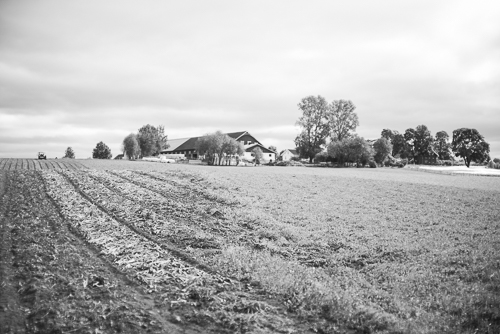
    The farm with an onion field and a meadow in the foreground
    The farm with an onion field and a meadow in the foreground

    Web site

    Map reference

    Photo gallery

    In spring 2021, I got a message from Biologisk dynamisk forening  that bio-dynamic farms in Norway needed seasonal workers because of Covid-19 restrictions. Since Fokhol farm was the only farm with domestic animals, I decided to go there in the last week of August.

    I was met by the farmer Rune, who showed me around the house where all the volunteers were living. All of them got separate rooms and there was a kitchen where we could prepare mostly dry food with delicious yogurt from the farm’s cows.

    My room had a view towards a garden with some deciduous trees where various very chatty birds could be heard, especially early in the morning.

    Fokhol farm is owned by a foundation called Stiftelsen Fokhol Gård, which is an ideal and non-profit foundation. The foundation has the following objectives:
    – Versatile biological-dynamic agriculture.
    – Development by means of cooperation with competent partners.
    – Educational activities.

    The farm has about 34 cows and some heifers. During my stay, I could see some male calves in a pen where they were quite often play-fighting. Another pen had a group of female calves, which were much more quiet.

    Fokhol is a biodynamic farm producing grain, potatoes, vegetables, milk, meat and fodder. They also have a small greenhouse where they are growing tomatoes and they have some bushes of redcurrant and blackcurrant, some fruit trees and some rows of flowers.

    My tasks during my stay included picking redcurrants, weeding a gravel path and picking onions. I joined two workers, one from Romania and one from Poland, to pick onions in three shifts, one in the morning, one in the afternoon and one in the evening. While the workers apparently never got tired and always picked all the onions, I got tired, especially in the back and I never managed to pick all of the onions. Anyway, I picked a lot of of them.

    Each of us had a basket, which we should fill with onions and bring them back to a trailer where we emptied the contents of the basket. When the trailer was full, one of the workers drove the tractor with the trailer to a barn. Having emptied the trailer and returned to the onion field, we did the same work again.

    During my stay it was common to hear trumpet-like sounds, which were caused by cranes. The farmer Rune, who told me he had been interested in birds since he was a teenager, said that they had a nest near the farm, but he didn’t know where. Besides cranes, he had also seen common buzzard and red kite during my stay, while barn swallows were flying over the field where we were picking onions, always looking for insects. In addition, he told me that a pair of common swifts had raised a second litter of chickens and they were getting ready to migrate southwards. The birds kept the number of flies low even though the cows continually spread manure on the meadows at the farm.

    There was a lot of spare time in the evenings and I went for walks in the area around the farm. First, I had to pass various meadows, many of which were covered with a wide variety of plants. Rune told me that they seeded the meadows with a mixture of 10 seeds, amongst them vetches and clover.

    I also passed a pen with Ardenner workhorses . Rune said that they were only used for work when he could teach someone to use them, but there were too few volunteers this year.

    The area around Fokhol was lovely, especially in the evenings just before sunset. The lake of Mjøsa could be seen in the distance and there were lots of deciduous trees between the meadows. It was beautiful and serene and I really felt like home in this area. A local an told me that it’s called the Nordic Tuscany.

    When we were picking onions, the cows were let out in the morning. Then, they walked very slowly and some even slower than the other ones to a nearby meadow where they could go grazing. Some time later they came back to be milked. Some volunteers worked with the cows, letting them enter the barn and go to their separate places, giving them hay and water, cleaning the barn, harvesting milk by means of milking machines and letting them outside again.

    The last days during my stay at the farm, a farm shop was opened where the public could buy the onions we had picked. Depending on the time of year, they also sell potatoes from the farm.

    I would recommend to work as a volunteer at Fokhol. Some of the volunteers stayed only a week or two, but some stayed for months. One volunteer was a student at an agricultural school and she would stay several months to get practice.

    A summary of a climate report in Norwegian on Fokhol farm follows below.

    House-holding with plant nutrients
    Norwegian agriculture is constructed to produce livestock products for domestic consumption with self-sufficiency regarding hay and fodder plants and a large part of imported fodder in terms of concentrated feeds.

    Climate impact of agriculture
    The climate impact of the operation at Fokhol farm is nearly 40 % lower per area unit compared to Norwegian agriculture overall. This also applies when the climate impact is related to the amount of produced nutrients in the form of energy and protein.

    Organic farms, like Fokhol farm, are based on circular production with a versatile crop rotation, self sufficiency if fodder and a major area of fields set aside for growing vegetables for human consumption.

    The reduced climate impact is, as with reduced loss of plant nutrients, a direct consequence of the high degree of self-sufficiency with a small supply of external resources and a limited number of livestock adapted to the amount of fodder produced at the farm.

    The soil as a carbon storage
    Growing meadows and adding manure, plant residues and roots to the soil after harvesting leads to binding of carbon in the organic matter.

    Production at Fokhol farm
    Production of foods at Fokhol farm are at a high level when expressed as energy and protein in plant and animal products. To a certain degree, it can be ascribed to the good growing conditions at the farm, but it’s also a result of an operation combining growing plants and raising livestock and a crop rotation where nourishing and consuming plants replace each other. Such cycles, where composting of manure according to bio-dynamic principles also enter into the operation, take care of plant nutrients and increases the feritility of the soil.
    Growing of vegetables, root vegetables and potatoes also contribute to the productivity of the farm.

    Concluding remarks
    By letting other farms follow the operation at Fokhol farm and others with similar activities, threats against soil and our common future will be reduced. This applies in particular to depletion of biological diversity and the weakening of the soil’s fertility in long-term perspective. Problems with manure runoff to watercourses and the sea will be reduced, likewise the consumption of non-renewable natural resources.

  • Dacha preparedness garden

    A detail of the preparedness garden with a small greenhouse
    A detail of the preparedness garden with a small greenhouse

    Web site

    Map reference

    Photo gallery

    I’ve known about the Dacha preparedness garden for several years, but because of Covid-19, I deferred contacting them until times were more tranquil. Then, we agreed to meet in August since the garden would be in full bloom at this time of year.

    The word dacha is derived from Russian, meaning a seasonal or year-round second home, often located in the exurbs of Russian-speaking and other post-Soviet countries

    The garden is driven by Anders and Barbro Nordrum and it is next to their house on the west side of the Strond fjord next to the town of Fagernes.

    I was met by Anders and he let me know about his origins, his thoughts about the preparedness garden and preparedness in general. Eating a light meal together, consisting of amongst others of bread with home-made syrup made from beetroot, Anders told me that he and his wife had made the syrup themselves.

    A glass with homemade syrup and a slice of bread with syrup
    A glass with homemade syrup and a slice of bread with syrup

    It was a time-consuming process, but at least it had showed that they didn’t need to buy sugar. In addition, although sugar is cheap and in plentiful supply now, it may not last.

    During our meal, he talked about his father who was responsible for radio communication during catastrophes in very poor countries.

    It’s naive to think that even though we are rich and live in Norway that we will always manage by buying what we need from other countries.

    He has always had a small plot of land where he has been growing vegetables and he has worked as a gardener and horticulture teacher at a gardening school for many years. Now, he’s working with horticulture in a prison in Valdres.

    We are particularly vulnerable to lack of artificial fertilisers, concentrated feeds, agricultural machinery, electrical power and fuel.

    During the First World War, Norway was ill prepared for the blockade of imported food, which took place. Thus, in order to be better prepared next time, Norway had a depot of grain from 1928 to 1995 and it should cover one year’s national consumption of grain. From 1996, it was gradually reduced and closed down in 2003.

    When Norway was invaded by Germany in 1940, the grain depot lasted till some time in 1941. In addition, there were many more farms than nowadays, farmers still had work horses and lots of people worked at the farms.

    To help people survive, the state made a brochure, which was called Mother Norway’s food book (Mor Norges matbok) and sent it to all households in Norway in 1940. It can be viewed here.

    Horticulture teacher Sverre Østlie published a book called ‘Cultivating potatoes and vegetables for amateurs‘ in 1942.

    Food preparedness was not mentioned in the election campaign in the autumn of 2020. The government of Mrs Solberg is satisfied because they have stress tested the supply lines, and now they are relaxing.

    What happens in case of another pandemic, drought, a huge sun storm, etc.?

    The garden
    Being sort of grown up with preparedness, Anders wants to have a plan B if the borders are closed and supplies run out. Anyway, in such cases he plans to stay on his property and cooperate with other people to help them with getting food too.

    A preparedness garden uses areas which, in any case, are not suitable for farmers and it doesn’t require resources which may be lacking in a crisis like machines, fuel, electrical power, etc.

    Initially, they used manure and artificial fertiliser to give nutrition to the vegetables, but they didn’t grow well. Meanwhile, their daughter Maria had studied Russian in Russa and even lived there for 5 years. At Easter in 2011, they went to visit her and her friends. On the tenth floor of a block of flats in Archangel, they could see shelves with fertilised vegetables, berries turned into jam and potatoes in sacks, all from their own dacha.

    They visited Vitalij and Jekaterina in the village of Brin-Navolok in the vicinity of Archangel in 2015. They had a dacha where they were growing vegetables and potatoes without manure because they had stopped raising domestic animals due to old age. Instead, they covered the ground of their fields with compost and grass they had mown themselves.

    After having returned from visiting the dacha of Vitalij and Jekaterina in Russia, they stopped applying both manure and artificial fertilisers and started instead to cover the ground with compost and grass, which they got from a nearby football field.

    Onion plants in the preparedness garden
    Onion plants in the preparedness garden

    The grass cover amended the soil by keeping the soil humid and warm and reducing weeds. Just after a few weeks, it had another structure with more earthworms, which pull the grass down into the soil and leave behind nutritious waste. In fact, there were so many earthworms that birds started picking the soil to catch them, but Anders has covered the ground with insect nets to prevent the birds from taking earthworms.

    They also apply urine, diluted with water in the ratio 1:10, and an infusion from nettles, which have been infused in water for some weeks, to fertilise the vegetables during sowing and planting. Both liquids contain nitrogen and lots of minerals that are beneficial to the vegetables.

    Soil needs to protect itself against erosion, and there is no black ground in nature for a long time because it will be healed by letting weeds grow there.

    Maria has written a book in Norwegian about preparedness gardens with her parents as helpers.

    It’s common to tend the flowers, but the book instead tells us that it’s the soil we should tend.

    Barren and compact soil can be amended and everything required is available in nature.

    Good soil is made by dead organic material falling to the surface of the soil and earthworms pull it into the soil. However, we have to give the earthworms a helping hand in the beginning by laying organic material like branches, potato peel, leftovers and seaweed at least 20 cm below ground. Instead, grass and wizened leaves can be laid on the ground, while compost and manure can be worked into the upper layer of the soil. Biochar can be used both on top of and in the soil, while ash can be put on the ground.

    In order to have a plan B for the lawn to turn it into a preparedness garden, it is necessary to have the following: spade, pitchfork, scythe, wheelbarrow, insect net, non-woven fabric to protect the plants against frost in cold countries and last, but not least seeds.

    The distance from where one lives should be limited to what can be carried by a wheelbarrow. The area of the garden should be at least 2 square metres, while the preparedness garden has an area of 200 square metres. 15-20 types of vegetables are recommended, and greater diversity gives more resilience against changing weather and insects.

    Crop rotation is highly recommended to reduce plant diseases.

    Anders has used hügelkultur to make beds in the preparedness garden. First, he removed some of the topsoil, next he put rotten branches where the topsoil had been, finally he covered all of it with topsoil. Hügelkultur leads to less plant diseases, it keeps the heat of the soil to some degree and it improves drainage.

    While Anders and Barbro were in Russia, they got two bulbs of garlic from a Russian monk. After having brought them back to Norway, the bulbs have given rise to about 15,000 garlic all over Norway to upwards of 1000 m above sea level.

    They are also growing an ancient sort of wheat, which was brought from the highlands of Mexico, where there is a short growing season. Now, other growers in Norway have also started cultivating it in the highlands of Norway.

    They are growing kohlrabi together with rocket or arugula . This is a good way of lessening the impact of attacks from caterpillars of the butterfly species white or garden white.

    Anders and Barbro are also broadcasting how to do a preparedness garden on their web site. The web site is chock full of advice on making a preparedness garden, growing vegetables, keeping seeds and much more.

    Seeds                                                                                                                                                                                                                        A package of 20 seeds, consisting of cucumber, cauliflower, broad bean, broccoli, dill, kale, carrot, Savoy cabbage, kohlrabi, parsley, rutabaga, turnip, leek, radish, beetroot, lettuce, squash, pea, a rye called svedjerug in Norwegian or slash and burn rye, and tomato is sold at beredskapshagen.

    The Norwegian company Solhatt  offers about 40 types of seed for sale, all of which have been grown in Norway.

    The Svalbard global seed vault contains seeds from all over the world and its purpose is to ensure genetic diversity of seeds. The amount of each type of seed is too low to be used in a time of crises.

    KVANN  is a Norwegian NGO where the members take care of and grow seeds.

    Norgro sells a variety of seeds.

    Two sorts of peas
    There are many vegetables in the garden and two of them are a sort of peas called ‘Jærert’ and ‘Lomsert’ in Norwegian, both of them named after where they have been cultivated: one at Jæren and the other one at Lom.

    The first one was grown for many years in fields of oats, and it was a hardy and easily cultivated sort and adapted the soil and climate at Jæren. From the 1950s onward, agriculture was gradually mechanized and the pea began falling out of use. Fortunately, it was saved by the efforts of only one man, the former chief county agricultural officer Einar K. Time.

    It is worth noting that ‘Jærert’ has been included in the Ark of Taste.

    Pea plants in the preparedness garden
    Pea plants in the preparedness garden

    ‘Lomsert’ is another old type of pea, which has been grown locally in Lom in the Gudbrand valley.

    While ‘Jærert’ can grow to be 2-3 m tall, ‘Lomsert’ attains a height of tens of centimetres above ground.

    Farewell
    Being very hospitable and kind, Anders and Barbro gave me some leaves of kale and lots of pods of peas. As if that wasn’t enough, they also gave me a signed copy of the book which their daughter Maria has written with their help.

    Let’s hope that they can keep the preparedness garden going and open for visitors for many more years to come.

    The web site

    Note that the web site of the preparedness garden is at https://www.datsja.no/.

  • Lega farmhouse dairy and bakery

    Picture of pizza crusts
    Pizza crusts

    Web site

    Map reference

    Photo gallery

    While doing a course on chair-making at Raulandsakademiet, the director told us that we could buy various farm products like cheese and pizza crusts at the reception. Since I want to support local agriculture, I bought some cheese and kling before I left. Having come back some days later in order to go to a bird-watching course, I decided to contact the producer. Since she accepted my inquiry, I took some time off the course to do an interview instead.

    Having arrived, I entered a small building and went upstairs where Gro Hommo and a female worker were making pizza crusts.

    Gro picked the dough from a kneader and put it on a bench. She divided up the dough in small parts, weighed it, applied flour to the dough and kneaded it, forming a bun.

    Kneading the dough

    Next, the worker, who was from Ukraine, put the “buns” on a dough roller, which turned them flat. Then, Gro lifted them up one by one by means of a small wooden ruler and laid it on a workbench where she flattened both sides by means of a roller pin.

    Rolling the dough

    Next, she applied salt and sprayed water on the dough.

    Applying salt to the dough and spraying it with water

    Finally, when the dough was ready, she put it on a hot electrical griddle and turned it upside down when it had been baked. Then, she baked the other side and put the finished pizza crust on another bench.

    Turning the pizza crust upside down

    She had 5 griddles on which she could put the finished dough and all of them were quite hot and I had to be careful to avoid being burnt. This was really hard work in a warm room.

    I asked Gro if they were growing wheat at the farm, but she told me it wasn’t possible since it was located at about 700 metres above sea level, making it too cold. Instead, she was using wheat flour from Kvelde flour mill. This made it possible to sell the bakery products with a mark of excellence: Spesialitet – unik smak . In addition, she used olive oil from Uliveti Castel San Martino. Incidentally, a man from Rauland was importing olive oil from that farm in Italy.

    In fact, this way of making pizza crusts is Gro’s idea, but she has never applied for any kind of protection like a patent because it’s expensive and time-limited.

    The pizza crusts would be sold to restaurants, but they are also sold in various shops in south-east Norway.

    Gro and her husband bought the farm about 40 years ago. While he was working outside the farm, she was tending goats because they were manageable for one person. The milk from the goats were used to make cheese. Gradually, she has expanded the farm and now there are about 250 goats and some tens of kids.

    Gro told me that about half the goats were on a mountain farm, while the kids, the young and the old goats were back home at the farm.

    Artificial insemination is used at different times of the year such that some of the goats produce milk all year, making it possible to make cheese all year too.

    Gro also showed me the farmhouse dairy where brown goat cheese was being made. Besides, she showed me two storerooms for storing cheese, being located next to the dairy.

    I asked her about the simple sign on the road passing the farm: Raundalen, the place where the farm is located. In fact, she didn’t want lots of tourists to arrive at the farm, but she had a farmhouse shop where those in the know could buy the farm’s products.

    Next, we went back to the bakery since there were more pizza crusts to make. Some time later, a young man entered the bakery and Gro told me that he was the husband of the woman with whom she was working. Getting workers from Norway is difficult and this was the reason for having workers from Ukraine. Gro asked me if I wanted to see the goats since he was tending them and I accepted, of course.

    Wearing clothes and boots from the farm, I was allowed to enter the barn. Having entered, I could see the Ukrainian man let the goats enter a part of the barn, which was used for milking. Instead, they were fed concentrated feeds and when they were finished, they were allowed to go outside again.

    Goats waiting to be fed

    Next, it was time to feed the kids. First, he opened a lid, letting the kids have access to a trough where he poured raw milk such that they could drink it.

    Feeding the kids with goat's milk

    Instead, the small kids were allowed to drink from a small cup filled with raw milk. Finally, the smallest kids were lifted and held up while drinking from the cup. The worker told me that he had to treat them with care because they could get diarhorea if they eat too much.

    Hand-feeding a kid with milk

    Next, he let the goats on the hill through two gates to the meadow below the house where they could enter the barn.

    The goats are grazing and ruminating

    The goats are going to be milked

    He told me that they prefer to stay inside at night even though they are allowed to go outside if they want. Anyway, the goats can go outside at daytime all year and the cold winters lead to that they get quite shaggy.

    This farm is selling kid meat from male kids. Instead, most male kids are just finished off at birth and the meat is not eaten.

    When I was about to leave, I could hear the sound of the rolling pin and the dough roller from the bakery. Obviously, being a farmer requires lots of hard work.

    The last day at Raulandsakademiet, we were served kid meat from Lega farm. I can honestly say that it was delicious and the meat was the most tender I’ve ever tasted.

    Both the farmhouse dairy and the bakery will move to Rauland because the present premises are too small. Economic support from Innovation Norway makes this possible.

    As told in various radio programmes, goat and kid are separated soon after birth, most of the goat milk is sold to Tine, goats had another diet in bygone times, which added a very strong taste to the goat cheese, while it’s milder now, the goats are milked twice daily and they really appreciate being caressed after milking, Gro brings the goats she likes best to an annual outdoor market called Dyrskun in Seljord, Gro and her family use kid meat for sausages, pinnekjøtt  and fårikål, Gro was running the farm on her own for many years, but now her son is running the farm.

    This farm makes the following products:
    brown goat cheese
    white goat cheese called Stavsfjell
    flatbread  two of them are made from flour from Kvelde mill and one of them is made from whey and another one is made from mash instead of flour.
    pizza crust
    prim is a spreadable goat cheese with added sugar
    cow cheese called Heimros  made from cow milk from the neighbouring farm.
    a cheese called knubbost  corresponding to feta cheese
    a blue cheese  called Vehus
    cream cheese
    crispbread which is called knekkebrød
    kling which is a local word for lefse
    kid meat

    On request, Lega can make yogurt, ice cream, sour cream and butter.

    Last but not least, Lega is placed in a beautiful part of Telemark and it’s really worth going there.

  • A photo from each visit

    For viewing the videos in full format, please click here.

    Here, videos showing one photo from each visit will appear.

    Photos from 2008 – 2010.

    Photos from 2011 – 2013.

    Photos from 2014 – 2015.

    Photos from 2016 – 2017.

    Photos from 2018 – 2019.

  • Albert Csaba – fish farmer

    Pitcure showing fishing farmed trout with a net
    Fishing farmed trout

    Photo gallery

    Leaving the guesthouse, I went with my guide and Mr. Albert north of Mircurea Ciuc for some distance, then we turned left, driving on a gravel road towards the area of Madaras. First, we passed fields and meadows, then we gradually entered a deciduous forest. While driving, Mr Albert told my guide that Filtermaiszter Zsolt started a fish farm in this area, but he sold it and moved to his present place. Besides, there were several others who had tried to make fish farms in this area, but they had given up.

    Finally, we arrived at the property of his father-in-law where there was a wooden cabin, an outdoor eating place and a fish pond, which had been excavated by Mr. Albert’s father-in-law.

    The bottom of pond was covered by a tarpaulin where the surrounding area was on the same level or lower than the pond.

    Next to the property, a small river was passing. In order to replenish the water in the pond, a tube was feeding water from the creek to the pond. Mr Albert, totally unfazed by the cold running water, removed some stones below which there was a wooden shield.

    Picture showing the owner removing stones from a river

    Below, there was a perforated metal plate above a concrete tube. Inside the concrete tube, but invisible to us, the tube connecting the the creek and the pond was residing. There was another invisible tube connecting the fish pond to a pond on the outside of the property. In this way, fresh water was passing through the fish pond.

    Another requirement for fish to survive is air. In the beginning, water was passing from the tube, falling into the pond in one place only. Mr. Albert noticed that the fish was gasping for air where water was entering the pond. Then, he understood that there was too little air in the pond and he constructed a setup such that water was falling continuously into the pond in three places instead of one. In this way, the flowing water will bring fresh air into the pond at the same time.

    Picture of the fish pond

    Pictiure from another side of the fish farm

    In order to protect the pond against predators, it was surrounded by a fence to prevent mink from entering. In addition, blue clotheslines were set up above the pond and a net was stretched out just above the surface of the pond to prevent birds like herons from taking the fish.

    The filter in the creek with the intake clogs easily and the same happens with another filter located in the tube above the fish pond. There is also a filter where water is leaving the pond in case of a higher water level on the outside.

    The fish are sensitive to environmental changes and the fish farmer has to be attentive.

    When it’s raining a lot, silt will appear in the gills of the fish.

    If the fish is afraid, it secretes a liquid which makes it slippery.

    If the fish don’t escape when someone arrives, they are probably ill. Then, he can close both intakes and where the water is flowing out of the pond. Next, he can apply a medicine for about 2 hours. Afterwards, he can let water enter and exit again, but he has to wait for 2 months before he can slaughter the fish.

    Mr. Albert buys rainbow trout spawn from Mr. Filtermaiszter in the spring and he slaughters them in the autumn.

    Once, he set up an advert about selling fish, but the response was too high. He pulled the ad and asked people to go to Mr. Filtermaiszter instead.

    He only produces fish for his family and some friends, while others are advised to go to Mr. Filtermaiszter.

    Mr. Albert uses a dog feeder to feed the fish at certain times, which the fish like.

    Picture showing the net for catching fish and a feeder

    However, he wants to install a fish feeder which spreads the feed, else the most greedy fish take almost all of it. Besides, he wants to install a LED light, which will light a small part of the pond and attract insects, which the fish can eat.

    He threw fistfuls of pellets into the lake and we could watch the fish partly jump out of the water in order to catch the feed.

    There are 650 rainbow trout in the pond in autumn and 1200 in summer, but he’s certain he can have 3000.

    He was using a net to haul up fish and when he hauled up enough for us, he finished off all of them, then he cleaned and grilled them. Finally, we had a delicious meal in the crisp autumn air.

    Picture showing fish to be prepared for lunch

    In fact, he prefers to keep the fish salted for 24 hours to bring out the taste, but it wasn’t possible for us because I was going home the next day.

    He needed to drain the pond because it freezes in winter. The next day, he would drain it, slaughter all the fish and put it in a freezer.

  • Kázmér brewery – premium craft beer

    Photo of Kázmér, the rooster
    Kázmér, the rooster

    Photo gallery

    We met the owner, Mr. István Szabó, of Kázmér brewery where he lives with his family. He invited us for tasting his Vienna lager in the garden and I must admit I was pleasantly surprised by its rich taste. I almost never drink lager because it’s become a drink, which tastes almost the same everywhere.

    Photo of beer and bread

    Vienna lager was developed by Anton Dreher in Vienna in the 1830s, combining the crispness of lager with the paler hues of the English ale by adding roasted malt in the mash of lager.

    The brewery is named after his rooster Kázmér, which lives in the chicken coop in the garden with one young rooster and many hens. He’s the boss of the chicken coop, at least for now.

    In addition to Vienna lager, Mr. Szabó also makes Belgian abbey beer, wheat beer and he wants to make American pale ale (APA), a suggestion from one of his sons.

    While we were enjoying his beer, he told us about how he ended up with his own brewery. He studied electronics and after graduation, he worked as an electrical engineer. His first job was to work in automation for a local brewery and he was worked with automating both malting and a pastueriser.

    He worked with an Austrian company from 1992 to 2004 and it was there that he learnt how to make beer. Next, he worked as a manager being responsible for investments and he has worked as a brewing manager for Heineken in Mircurea Ciuc and Targu Mures.

    He worked for 3 years as a director for Heineken and he had to move wherever the company wanted. He quit in the beginning of 2017 and he has been living from his savings ever since. Brewing beer is a hobby for him, but now he’s starting to make money from it as well.

    He started one and a half years ago and he had to overcome a lot of bureaucracy to get a permit for brewing beer and he will get it soon. Unfortunately, he has to fulfill the same requirements as an industrial brewery and he has to accept inspections of his brewery and pay a lot for it. In addition, he has to pay extra tax for producing drinks with alcohol according to Romanian law.

    When he quit his last job, he got a kit for making beer from his colleagues. Thereafter, he bought a 25 litres set for making mash from New Zealand. Not being content with its thermal performance, he has put a layer of thermal insulation around it.

    Photo of the brewery
    Inside the brewery

    Mr. Szabó buys malt and crushes it manually in a mill, the beer making machine has an inner porous cylinder and an outer tight cylinder. He pours crushed malt in the inner cylinder together with water. He heats it up and after some time, the water has turned into wort. The mash is given to the poultry.

    Photo of mash
    Mash

    He boils the wort, next he adds hops because they add flavour and kill bacteria. Thereafter, he pours the liquid into a fermentation tank and adds yeast. Then, fermentation is done at a controlled temperature of about 10°C for 1 week. After the main fermentation, the beer is matured for another 2 weeks in stainless steel vessels.

    Photo of a fermentation tank
    Fermentation tank

    When the fermentation is finished, he removes the yeast or he lets out the beer. In any case, he pours the beer into containers and stores them in a fridge with a controlled temperature of about 0.5°C. This is the maturing process.

    Mr. Szabó makes 100 litres beer a week and he works 16 hours per week. He asked me to calculate how much he produced per hour and that should be 100l/16h = 6.25 litres of beer per hour.

    He starts making new beer while another batch is fermenting, he’s reinvesting all profits, he’s selling his products to friends and he sells a lot to doctors in Bucharest.

    He wants to sell beer in bottles to a pub, bringing the bottles back to his place, removing the labels and washing them himself. Then, he can ensure that there is always fresh beer in the pub.

    He will make draft beer later.

    Some Romanian beers had good quality in communist times, but after 1989, Romanians discovered beers from Western Europe. Big breweries arrived, a price war erupted and in order to survive there were two possibilities:
    1. develop a less lossy production.
    2. use less ingredients, turning the beer into water beer.

    Craft beer started being developed at the same time with aroma and content, but it’s too rich and tasteful for many people.

    He wants to make something in the middle between water beer and craft beer.

    He follows the German clean law for beer-making using only water, hops, malt and yeast.

    He glues labels to his bottles by means of milk. Then, he can wash them off easily after the bottles have been returned.

    He’s willing to exchange 4-6 bottles of beer with a bottle of good wine

    He has three compost heaps, each one one year older than the others and all of them are fermenting and producing heat. After three years, he transfers some of the finished compost to the two other ones and he uses the rest as fertiliser.

    During our visit, it was obvious that we were visiting an engineer: from modifying the beer-making set, the temperature-controlled setup for maturing the beer, the chicken coop and the compost heaps. This is a man who likes to solve problems and he does it in a practical way!

  • Krausz chocolate

    Photo of chcocolates
    The chocolates made at this workshop

    Map reference

    Photo gallery

    We met Mr Szilard Fazakas outside his family’s house, next we entered the workshop located next to the house. It had been a stable, but he had converted it into a workshop with tiles on the floors and the lower walls.

    Having passed his office, we entered the workshop where there were some idle machines together with a chocolate tempering machine constantly moving liquid chocolate.

    When he should start his company, Mr Fazakas was wondering about a brand name and, at a family reunion, he discovered the name Krausz, the last name of his great grandmother. She had two daughters and the name disappeared. He thought it was perfect and catchy, immediately calling his company Krausz chocolate.

    Instead of moving the liquid chocolate with spatulas, he used an infrared thermometer to measure the temperature of the liquid chocolate in a chocolate tempering machine.

    Poto of temperature measurement
    Measuring the temperature of the chocolate mass

    Spots of cocoa butter are visible on the surface of the chocolate if not done correctly, a phenomenon, which is called crystalisation. An interesting video about crystallisation can be watched here. Mr Fazakas wants the surface to be shiny, smooth and brown, which he obtains by extracting liquid chocolate when it has the correct temperature.

    Picture showing pouring chocolate mass in a mould
    Pouring chocolate mass in a mould

    He used a ladle to put liquid chocolate in a mould with symmetric voids, laid it on a shaker and let it be shaken for some time to get rid of bubbles and make the chocolate even before he scraped away the excess chocolate with a spatula. Next, he poured the contents of the mould into the chocolate bath and put it in a freezer.

    Picture showing the owner letting excess chocolate leave the mould
    Letting excess chocolate leave the mould

    When he took it out again, the voids in the mould were covered with a thin layer of chocolate.

    Next, he put some walnut cream in a plastic bag and shaped it into a piping bag, cutting a small hole in the thin end.

    Picture showing walnut cream in a cone-shaped plastic bag
    Walnut cream in a cone-shaped plastic bag with a hole at the base

    He laid walnut kernels in each void of the mould covered by chocolate.

    Picture showing the owner laying walnuts on top of the chocolate
    Putting walnuts in the voids of the chocolate

    Next, he pressed walnut cream on top of the walnut kernels, filling the voids.

    Picture showing the owner putting walnut cream on each chocolate
    Putting walnut cream on each chocolate

    Finally, he took chocolate with a ladle from the tempering machine and poured it over the complete mould. Thereafter, he scraped away excess chocolate, put it on the shaker and scraped away more chocolate. In the end, he put it in a freezer.

    He also laid blackberries from this village on the surface of a still liquid chocolate lying in a mould.

    Mr Fazaka’s philosophy philosophy is to be a local producer, producing as much as people want to buy, but quality is more important than quantity. In fact, he spent 6 months to create a palette. Fortunately, there is a low health risk when making and selling chocolate.

    Once, he should make 5000 chocolates for the pope’s visit and he had to make a mould, a recipe and packaging. Unfortunately, the representative from the church was bargaining so much that he had to compromise on quality, meaning that the chocolates didn’t measure up to his high requirements.

    Another time, he made a mould for a coffee shop, but it was too complex and chocolate was remaining in the mould when he should extract it.

    His greatest challenge is the packing machine, which he bought new, but it melts the chocolate and he can’t use it. Anyway, he has a Hungarian packing machine, which is 80 years old and it works well.

    He bought the shaking machine first, but it can also be used as a tempering machine. He’s planning to reuse it together with the old packing machine. He wants to make chocolate with dried plum in this machine where the chocolate will be carried on a conveyor belt and be cooled down by means of air blowing over them.

    He also needs to follow up printing companies tightly such that they make labels according to his wishes.

    He’s selling his products under another brand name in supermarkets and it gives him more profit. He also sells his products in flower shops and wine cellars under his own brand name. He prefers to have as many sellers and retailers as possible because he only wants to be an entrepreneur, experimenting, designing and producing chocolate. In fact, he wants to sell both chocolate, ice cream and cheese.

    Mr Fazakas started making and selling ice cream in 2010 and stopped in 2018.

    He buys cocoa from Italy.

    He has a golden rule: never rinse the moulds with water. Instead, he melted chocolate in a mould with hot air, then removed the remains with a cloth.

    He studied at a university in Cluj and he learnt chocolate-making there, but he prefers this quiet place to Cluj. It’s a good place to grow up for his children and his family can get what they want from Mircurea Ciuc.

    He got an EU grant for startup companies and he gets help from his parents.

    Before VAT was 20% for all products, but now its 9% for food such that he can earn more.